
When you speak, I guarantee you will be heard
Zacarese & Zalewski P.C.
Navigating Emergency Child Custody: Finding the Right Legal Representation
Call now: 516-660-4354
"He didn't just win my case. He gave me back my future, my peace of mind, and my ability to breathe again."
From the very first conversation, he changed everything. He didn't just see a case, he saw me, and treated me like family. His knowledge of the law was unmatched, but what truly set him apart was his humanity. If you are looking for a lawyer, stop searching right now.


Understanding Emergency Child Custody vs. Standard Custody Proceedings

When you worry about your child's safety, waiting months for a normal court date is not an option. A standard custody case takes time. Both parents file papers, go through mediation, attend conferences, and eventually reach a settlement or trial. This process allows the court to carefully review everything, but it moves slowly.
Emergency custody is completely different. It is designed for situations where a child faces immediate danger or serious physical harm. Instead of waiting weeks just to get a first appearance, an emergency filing asks the court to step in right away.
In these urgent moments, a judge can issue what is called an ex parte order. This means the judge makes a temporary ruling to protect the child before the other parent even has a chance to speak in court. Because this bypasses normal legal notice, courts set a very high bar for granting them. Understanding the truth about emergency custody petitions in New York helps parents realize that these orders are short-term safety shields, not permanent rulings. For a broader look at how courts handle urgent child protection cases, the American Bar Association's guide to child custody explains the legal framework behind these decisions.
| Feature | Standard Child Custody | Emergency Ex Parte Custody |
|---|---|---|
| Primary Goal | Long-term parenting plans and legal decision-making | Immediate physical protection of the child |
| Notice to Other Parent | Advanced formal notice and time to reply | Order can be granted before the other parent responds |
| Initial Court Timeline | Several weeks to months for an initial appearance | Same day or within 24 to 72 hours |
| Duration of Order | Permanent until modified by court or age of majority | Temporary; lasts until a full formal hearing (often within 10 to 14 days) |
| Evidentiary Standard | Best interests of the child | Imminent risk of serious bodily harm, abuse, or abduction |
Legal Grounds for Requesting Immediate Court Intervention
Courts do not grant emergency orders for everyday parenting disagreements. A parent being late for pickup, feeding a child junk food, or arguing over bedtime does not qualify as an emergency. Judges require clear evidence of serious, immediate danger.
Common legal grounds that justify immediate court action include:
- Physical or Sexual Abuse: Direct harm or credible threats of violence against the child.
- Severe Domestic Violence: Violence occurring in the home that puts the child in physical danger.
- Severe Child Neglect: Leaving young children unattended, failing to provide necessary medical care, or leaving a home without food, heat, or water.
- Parental Substance Abuse: Active drug or alcohol abuse that leaves the parent completely unable to supervise or care for the child safely.
- Flight Risk and Parental Kidnapping: Credible threats or actions showing a parent intends to take the child out of state or out of the country without permission.
- Parental Incarceration or Incapacitation: When the custodial parent is suddenly arrested or suffers a medical crisis, leaving the child without legal care.
When severe safety threats happen, changing custody quickly when serious safety issues arise becomes the top priority to ensure the child stays safe.
Who Has Legal Standing to File an Emergency Petition?
Not just anyone can walk into court and ask for emergency custody. You must have legal standing, meaning you have a direct, recognized legal relationship with the child.
- Biological or Legal Parents: Mothers and established legal fathers always have standing to file emergency petitions.
- Legal Guardians: Individuals who already hold court-ordered guardianship.
- Grandparents and Close Relatives: In New York, grandparents can step forward when extraordinary circumstances exist, such as abandonment, severe neglect, or parental unfitness. Learn more about emergency custody legal options for grandparents to see how family members can step in.
- Child Protective Services (CPS): County social services agencies can file emergency removal petitions if their caseworkers find that a child is in immediate danger.
When a crisis strikes the family home, grandparent intervention in urgent custody situations helps ensure children are placed with loving family rather than entered into foster care.
The Legal Process and Evidentiary Requirements for Emergency Orders
Courts rely on real evidence, not just emotional statements or hunches. To convince a judge to change a child's living arrangements on an emergency basis, you need solid proof showing an immediate danger of serious harm.
Helpful forms of evidence include:
- Police Reports and 911 Call Logs: Official records showing police intervention at the home.
- Medical Records: Hospital, urgent care, or pediatric notes documenting injuries, physical trauma, or severe neglect.
- CPS Investigation Reports: Notes, findings, or open safety plans from child welfare caseworkers.
- Digital Communications: Threatening text messages, voicemails, emails, or alarming social media posts.
- Photographs and Videos: Clear time-stamped images of physical injuries, dangerous living conditions, or drug paraphernalia in reach of the child.
- Sworn Eyewitness Statements: Written affidavits from teachers, neighbors, daycare workers, or relatives who directly saw the danger.
Across different states, emergency laws follow strict procedural frameworks. In Texas, emergency relief often takes the form of an immediate temporary restraining order followed by a hearing within 14 days. In Virginia, petitions filed under Virginia Code § 16.1-241(A)(3) grant juvenile courts power over substantial harm risks and require hearings within five business days. In Georgia, courts often review petitions within 24 to 72 hours, with some counties issuing same-day orders. Understanding these standards is vital when filing multi-state or jurisdictional requests.
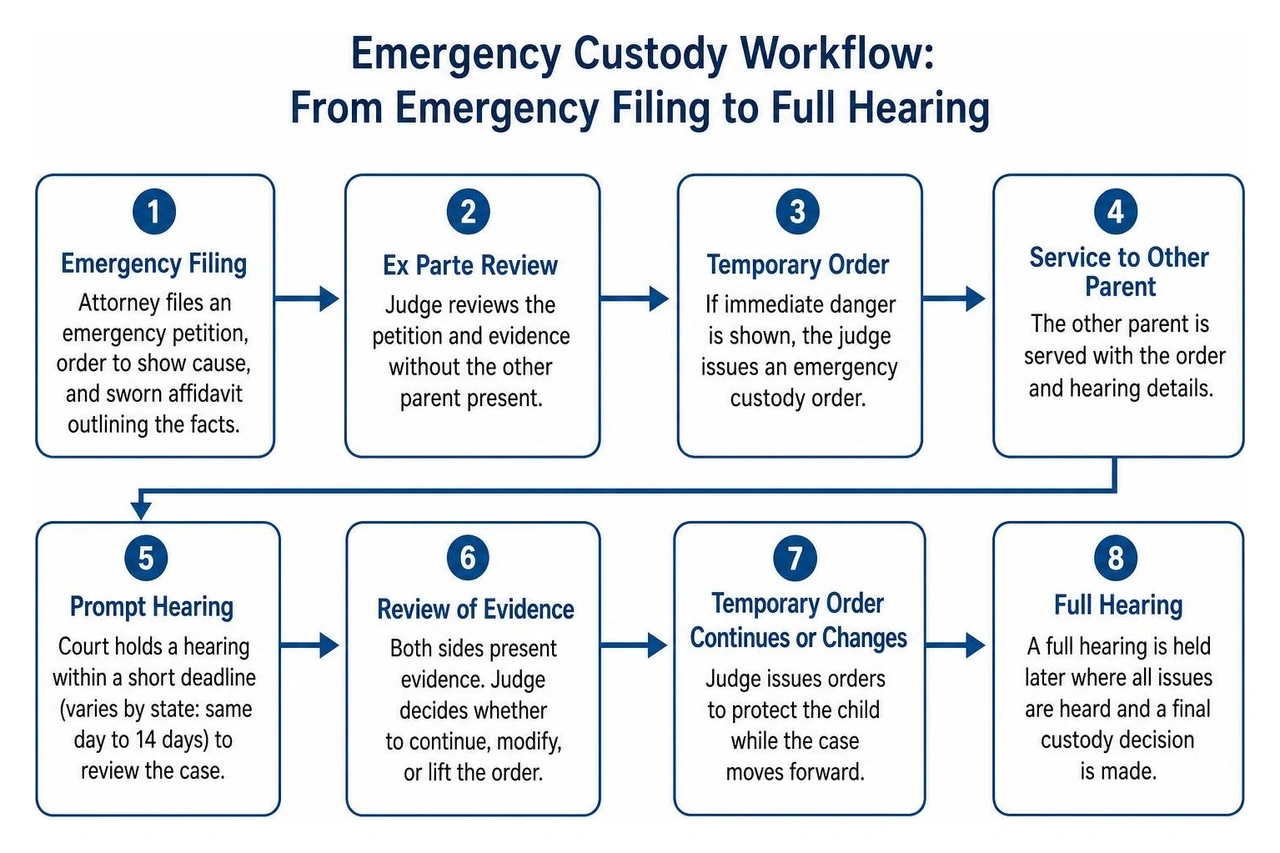
Step-by-Step Procedure: From Ex Parte Motion to the Full Hearing
Filing for emergency custody follows a strict sequence:
- Drafting the Petition and Order to Show Cause: Your attorney drafts a formal emergency petition along with a sworn affidavit outlining the facts.
- Same-Day Judicial Review: The papers are brought directly to a family court judge. In urgent cases, the judge reviews the paperwork that very day.
- Ex Parte Ruling: If the judge agrees the child faces immediate harm, they sign a temporary order granting immediate custody or protective restrictions.
- Formal Service of Process: The other parent must be served with copies of the emergency order and petition so they know about the court action.
- The Follow-Up Full Hearing: Emergency orders do not last forever. In New York, North Carolina, and Maryland, the court holds a follow-up hearing—typically within 10 days—where both parents can testify and present evidence.
Courts remain open for emergencies year-round. Even during major holidays, courts maintain on-call judges, which is essential when navigating emergency family court filings during holiday periods.
Common Challenges, Risks, and Unmarried Parent Hurdles
Emergency filings come with serious risks if handled incorrectly. If a parent files an emergency petition simply to gain an advantage in a divorce or custody dispute without real evidence of danger, the judge will see through it. Frivolous filings can result in court sanctions, payment of the other party's attorney fees, and severe loss of credibility in future hearings.
Unmarried fathers face an additional hurdle: establishing legal paternity. If an unmarried father is not listed on the child's birth certificate or does not have an official Order of Filiation, the court may require paternity to be addressed before granting emergency custody.
Choosing the Right Emergency Custody Attorney for Your Family

When an emergency happens, you need a lawyer who understands local family courts and knows how to move quickly. Steven Zalewski is widely known as one of the most respected family court trial lawyers in Suffolk County, regularly fighting for parents in Suffolk County Family Court locations across Islandia, Central Islip, and Riverhead.
When your family's future is on the line, having experienced child custody representation in Suffolk County makes all the difference in preparing documents quickly and presenting them clearly to a judge.
Important Warning About AI Tools: Do not rely on artificial intelligence tools like ChatGPT to draft custody agreements, emergency petitions, or separation paperwork. Generic, robotic AI programs do not understand local court rules, cannot evaluate child safety nuances, and miss critical legal details that can permanently hurt your case. Protecting your child requires human empathy, strategic thinking, and local legal experience.
Critical Questions to Ask an Emergency Custody Attorney
When consulting with an attorney during a family crisis, ask these practical questions:
- How fast can your office prepare and file an emergency Order to Show Cause?
- Do you have direct experience handling ex parte hearings in local family courts?
- How do you communicate updates to me during after-hours emergencies?
- What happens if the other parent contests the order and we have to go to a full trial?
- What is your complete fee structure for both pre-trial and trial work?
Understanding Legal Fees and Costs for an Emergency Custody Attorney
Many law firms charge steep hourly rates that quickly burn through retainers. When cases get complex or require multiple court dates, hourly bills can skyrocket, leaving families stranded mid-case.
At Zacarese & Zalewski P.C., we do things differently. Steven Zalewski uses an honest, transparent flat-fee model:
- Pre-Trial Flat Fee: One clear fee that covers every appearance, motion, phone call, and negotiation leading up to trial—no matter how many court dates are required.
- Trial Fee: A single, set fee due 30 days before a scheduled trial date if the case cannot be resolved through settlement.
Unlike other firms that revert to surprise hourly billing or drop clients when their retainer runs dry, Steve never leaves a client behind because they ran out of money. Payment plans are always available to help families get the protection they need without unexpected bills.
Debunking Common Myths About Emergency Child Custody
There is plenty of bad advice online about how emergency custody works. Here are the facts behind common misconceptions:
- Myth 1: Emergency custody orders are permanent.
- Reality: Emergency orders are short-term safety tools. They protect the child only until both parents can appear at a full formal hearing.
- Myth 2: You only need to tell the judge you are worried.
- Reality: Feelings and worries are not enough. Judges require clear proof, such as police reports, medical documents, photos, or witness statements showing real danger.
- Myth 3: You can easily handle an emergency filing yourself without a lawyer.
- Reality: Family court rules are strict. Minor paperwork mistakes or failing to meet evidentiary rules can lead to an immediate dismissal, leaving your child unprotected.
- Myth 4: An emergency order automatically terminates the other parent's rights.
- Reality: Emergency orders do not terminate parental rights. They temporarily adjust physical custody or require supervised visitation to keep the child safe.
Frequently Asked Questions About Emergency Custody
How quickly can a judge issue an emergency custody order?
If the petition shows clear and immediate danger, a judge can review and sign a temporary ex parte order the very same day it is filed. In less critical circumstances, reviews typically occur within 24 to 72 hours.
What happens if the court denies an emergency custody petition?
If a judge decides the situation does not meet the emergency threshold, the petition is not simply thrown out. Instead, it is routed to the standard family court docket. You will receive a standard court date where both parents can present their arguments through the normal process.
Can an emergency custody order lead to permanent custody?
Yes, indirectly. While the initial emergency order is temporary, the evidence presented during the emergency and follow-up hearings often serves as the foundation for the court's final, long-term custody determination.
Conclusion: Securing Swift Protection for Your Child
When your child's physical safety is at stake, acting immediately with the right legal strategy is essential. Gathering your documents, filing the correct emergency petitions, and having seasoned trial counsel by your side ensures your voice is heard clearly in court.
If you are facing an urgent family crisis, schedule an urgent consultation with our custody attorneys to protect your child today.
📱 Cell: (516) 660-4354 📧 Email: steve@zandzfamilylawyers.com 🏛 Address: 1601 Veterans Memorial Highway, Suite 500, Islandia, NY 11749
i guarantee you will be heard
Ready to Take the Next Step?
At Zacarese & Zalewski P.C., when something isn’t right, say something—and we’ll do something about it with you.
Our flat-fee structure is clear: one flat fee for pre-trial work, and a trial fee only if your case goes to trial or a hearing. Call now and a professional will return your call quickly; if we miss you, we'll call back the same day.