
When you speak, I guarantee you will be heard
Zacarese & Zalewski P.C.
Everything Local Residents Must Know About Schenectady Family Court Proceedings
Call now: 516-660-4354
"He didn't just win my case. He gave me back my future, my peace of mind, and my ability to breathe again."
From the very first conversation, he changed everything. He didn't just see a case, he saw me, and treated me like family. His knowledge of the law was unmatched, but what truly set him apart was his humanity. If you are looking for a lawyer, stop searching right now.


Finding Your Way Through Schenectady County Family Court
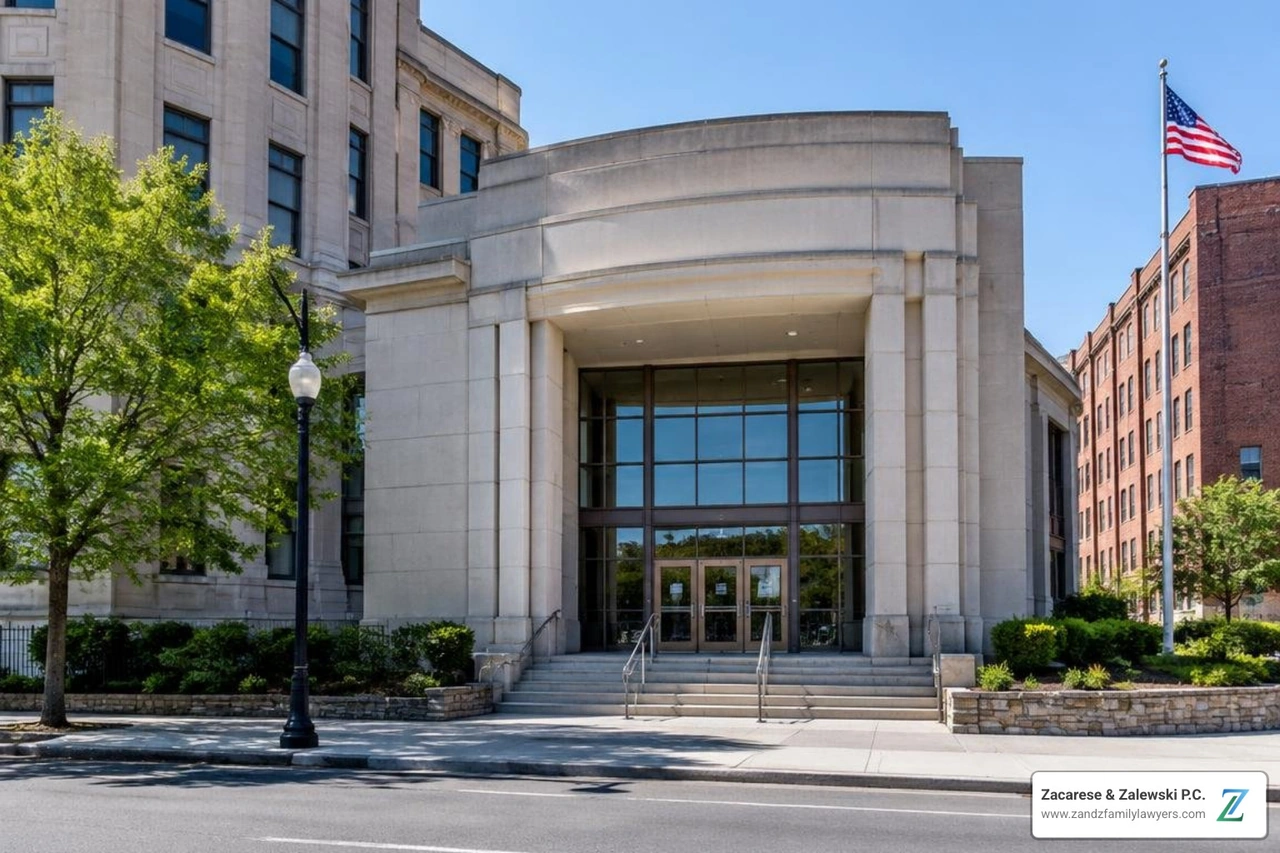
Schenectady County Family Court handles custody, parenting time, child support, paternity, orders of protection, and other matters involving children and families. It is at 620 State Street, Schenectady, NY 12305. Call 518-285-8435 to check current hours and filing instructions before you go.
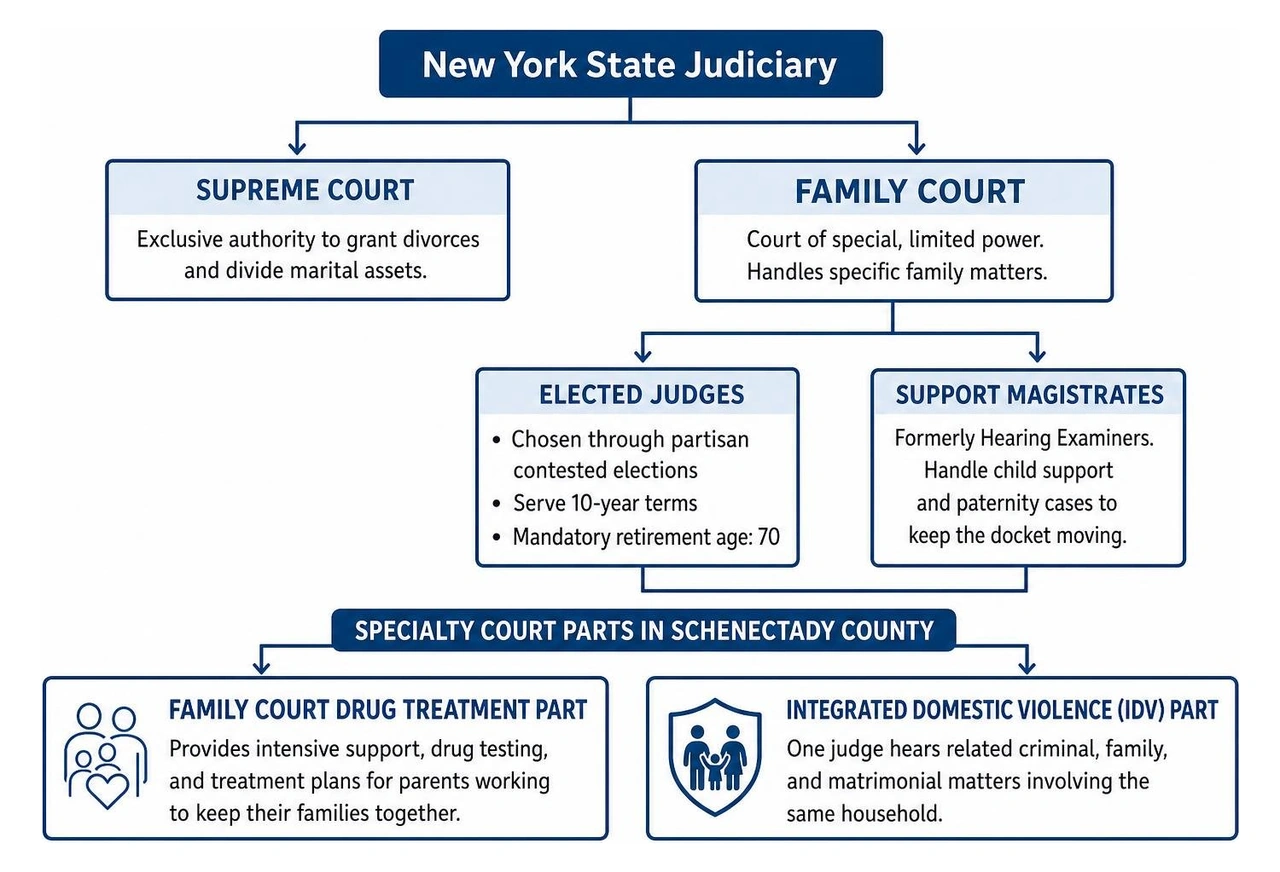
To start a case, you generally file a petition with the Family Court clerk. Bring any existing court orders and records that relate to your request. The clerk can explain filing steps, but cannot give legal advice. If you need a divorce, you must file in New York Supreme Court, not Family Court. Local residents who need help navigating family court in Schenectady, NY can still get clear guidance on custody, support, and safety petitions from the clerk's office or from a family law attorney.
Jurisdiction, Location, and Structure of the Family Court Schenectady NY
Entering a courthouse can feel intimidating, but knowing how the building works gives you confidence. The Schenectady County Family Court sits right inside the county complex at 620 State Street, Schenectady, NY 12305. The court is open Monday through Friday from 9:00 AM to 5:00 PM. It is closed on weekends and official state holidays. You can contact the clerk's office directly by calling 518-285-8435 to confirm room numbers or ask about daily calendars. If you need general directory details, you can view the Schenectady County Family Court in Schenectady, NY - Court Information listing before planning your visit.
Family Court is a court of special, limited power under New York State law. This means it only hears specific types of family disputes. The court handles legal matters like:
- Determining legal paternity for children.
- Establishing legal guardianship.
- Processing private and agency adoptions.
- Managing child abuse, neglect, and foster care cases.
- Handling Persons In Need of Supervision (PINS) and juvenile delinquency cases.
- Issuing orders of protection for family offenses.
- Deciding child custody, parenting time, and financial child support.
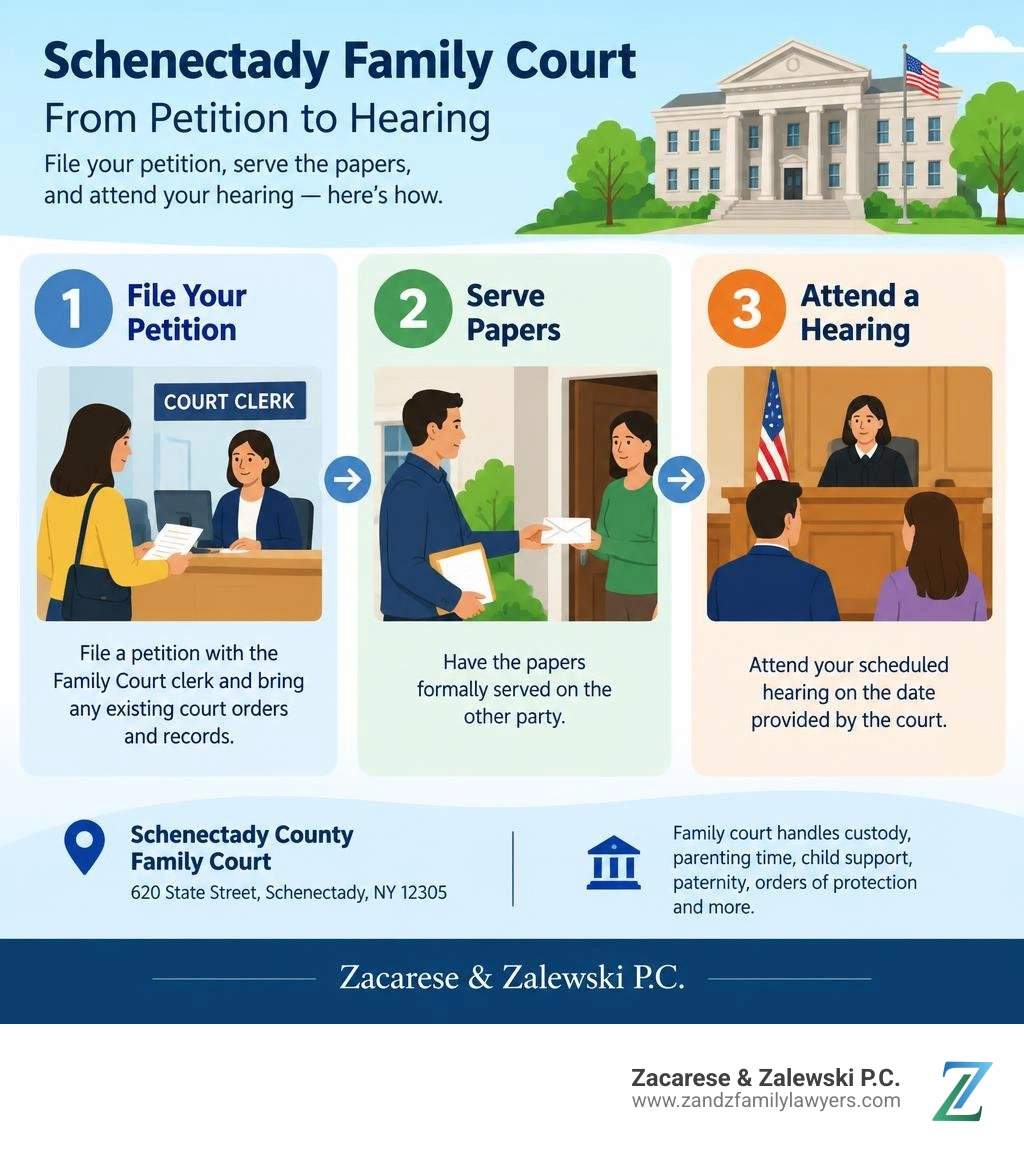
One major point often confuses local families: Family Court cannot grant a divorce. Under New York law, only the Supreme Court has the authority to end a marriage and divide marital assets. The median total cost of an uncontested divorce in New York runs about $5,500, with mandatory court filing fees between $335 and $400. While Supreme Court handles the divorce itself, it often refers custody or support questions down to Family Court.
| Legal Feature | New York Supreme Court | New York Family Court |
|---|---|---|
| Divorce Decrees | Yes (Exclusive Authority) | No |
| Property Division | Yes (Equitable Distribution) | No |
| Filing Fees | $335 to $400 Index/Filing Fees | Free to file most petitions |
| Child Custody & Support | Yes (During Divorce) | Yes (Standalone Petitions) |
| Orders of Protection | Yes (During Matrimonial Actions) | Yes (Family Offense Petitions) |
Judicial Structure and Specialty Parts in the Family Court Schenectady NY
Family Court judges across New York outside of New York City are chosen through partisan contested elections. These elected judges serve 10-year terms and face a mandatory retirement age of 70.
In addition to elected judges, the court uses Support Magistrates (formerly called Hearing Examiners). These judicial officers handle child support and paternity cases. This keeps the docket moving so full judges can focus on custody trials, child safety, and family offenses.
Schenectady County also runs dedicated problem-solving courts. You can read more about these specialized dockets through the official Schenectady County Courts page. For example, the Family Court Drug Treatment Part provides intensive support, drug testing, and treatment plans for parents working to keep their families together. The county also operates an Integrated Domestic Violence (IDV) part. This special court allows one single judge to hear related criminal, family, and matrimonial matters involving the same household.
How to File Petitions and Navigate Custody and Support Proceedings
Starting a legal proceeding begins by filing a formal petition with the clerk's office. You must clearly state what you are asking the judge to order and explain why you qualify for that relief.
When preparing your documents, you can review our Suffolk County Family Court Filing Guide to understand standard New York petition requirements. Once the clerk files your petition, they issue a summons with your court date.
You must legally serve the other party with these papers. You cannot hand the papers to the other party yourself; an adult who is not part of the lawsuit must deliver them and sign a sworn, notarized affidavit of service.
When your initial appearance date arrives, follow standard courtroom rules:
- Arrive at least 45 minutes early to clear building security.
- Check in with the court officer outside your assigned courtroom.
- Dress neatly and turn off your cell phone completely.
- Speak only when the judge or magistrate addresses you, and always address the bench as "Your Honor."
To reduce your stress before entering the building, review our guide on What to Expect at Your First Family Court Hearing in Suffolk County. The courtroom steps are very similar throughout New York State.
A Warning About AI Legal Generators
Many people try to save money by using AI tools like ChatGPT to write custody agreements or separation plans. We strongly advise against this. Computer programs do not know local courtroom customs, and they make up rules that do not exist under New York law. Generic, robotic AI documents miss critical details about holiday schedules, school choices, and medical emergencies. Those small errors can harm your family for years. Only a real human attorney with genuine empathy and deep courtroom experience can protect your rights and your children.
Resolving Custody, Visitation, and Protection Orders
When parents cannot agree on a schedule, the judge must make decisions based on the child's best interests. The court looks at:
- Which parent has served as the primary daily caregiver.
- Each parent's home stability and daily work schedule.
- The physical and emotional health of both parents.
- Each parent's willingness to encourage a warm relationship with the other parent.
- Major changes in your child's life, like school shifts or special needs.
If you are dealing with domestic violence, you can file a family offense petition for an emergency temporary order of protection. The court can order the other party to stay away from your home, job, and children.
Child Support Enforcement and Timeline Guidelines in the Family Court Schenectady NY
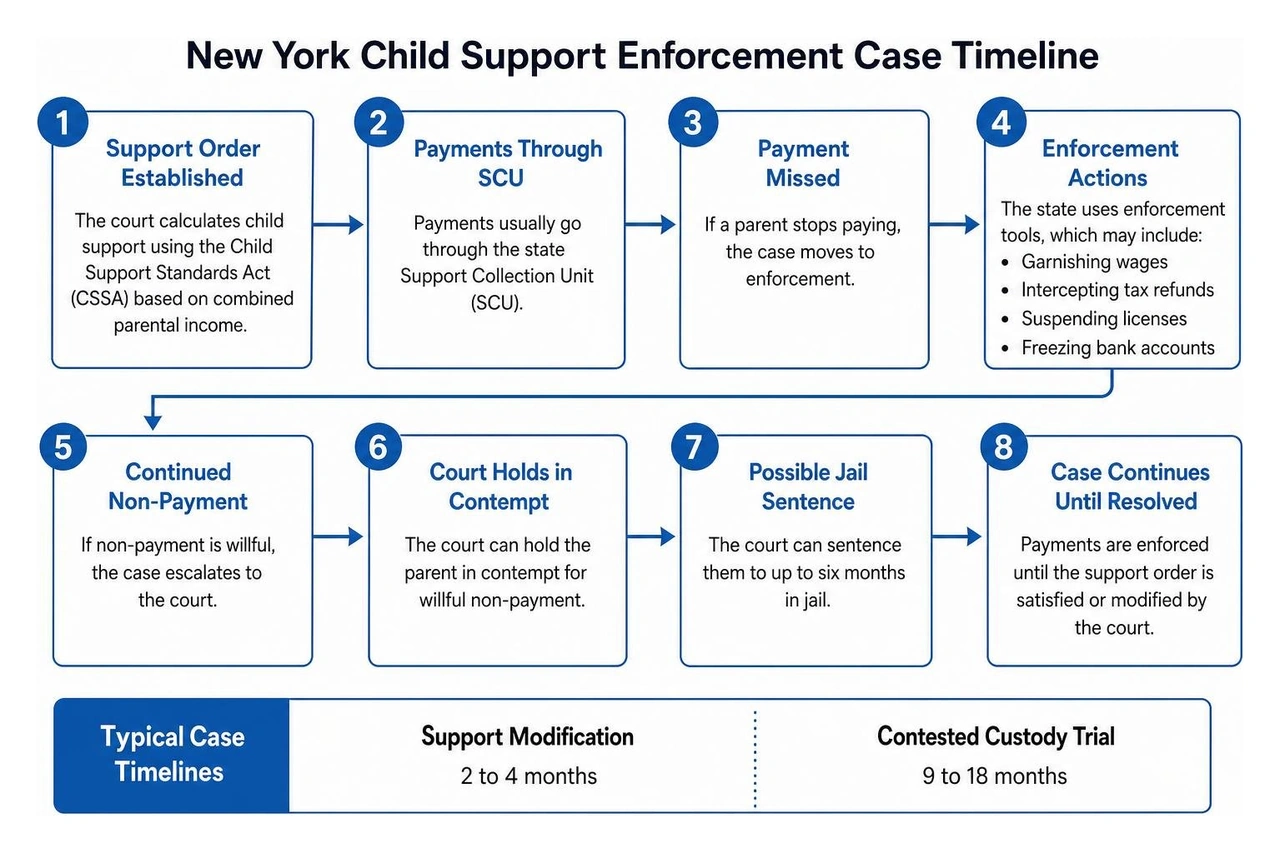
New York calculates child support using the Child Support Standards Act (CSSA). The court applies a fixed percentage to combined parental income:
- 17% for one child
- 25% for two children
- 29% for three children
- 31% for four children
- At least 35% for five or more children
Payments usually go through the state Support Collection Unit (SCU). If a parent stops paying, the state has strong enforcement tools:
- Garnishing wages directly from paychecks.
- Intercepting state and federal tax refunds.
- Suspending driver's, professional, and recreational licenses.
- Freezing bank accounts.
If non-payment is willful, the court can hold the parent in contempt and sentence them to up to six months in jail.
Parents often ask about case timelines. A straightforward support modification might take two to four months, while a contested custody trial can take nine to eighteen months. You can read more about typical case lengths in our article on How Long Does a Family Court Case Usually Take in Suffolk County NY.
Managing Court Challenges, Court Resources, and Filing Appeals
Litigants often face heavy stress in family court. Public reviews show Schenectady Family Court holding a rating of 2.3 out of 5 stars across 21 reviews. Common complaints focus on slow scheduling, calendar delays, and feeling unheard during short appearances.

Knowing how to protect your rights helps you stay calm during these delays:
- Challenging a Support Magistrate's Order: You have 30 days from the date the order is handed to you in court (or 35 days if mailed) to file written objections with the Family Court judge.
- Appealing a Judge's Final Order: Final decisions must be appealed to the Appellate Division, Third Department, located in Albany. You must file a Notice of Appeal within 30 days.
For more background on court procedures, read our Suffolk Family Court Guide 2026.
Honest Legal Representation: The Flat-Fee Advantage
Legal fees cause immense stress during family disputes. Traditional law firms bill by the hour, sending confusing monthly bills for every email and phone call. When cases get complicated, some lawyers demand more money or walk away mid-case when clients run out of funds.
At Zacarese & Zalewski P.C., we do things differently. Steven Zalewski is one of the most well-known family court trial lawyers in Suffolk County, serving families across Islandia, Central Islip, and Riverhead. We use an honest, clear flat-fee model:
- Pre-Trial Flat Fee: Covers all preparation, motions, conferences, and appearances leading up to trial—no matter how many court dates it takes.
- Trial Fee: A single, set fee due 30 days before your scheduled trial date if your case does not settle.
Steve never abandons a client because they run out of money, and flexible payment plans are always available.
Frequently Asked Questions About Schenectady Family Court
Can I get a divorce in Schenectady Family Court?
No. Family Court cannot grant divorces or divide marital property. You must file for divorce in New York State Supreme Court.
What should I bring to my first family court appearance in Schenectady?
Bring your petition, your notarized affidavit of service, photo ID, recent pay stubs, tax returns, and any existing court orders. Learn more by reading our checklist on Preparing for Your Family Court Appearance in Suffolk County What to Expect.
What happens if a parent ignores child support orders?
The court can enter money judgments, garnish paychecks, suspend driver's licenses, intercept tax refunds, and order jail time for willful contempt.
Conclusion
Navigating family court takes preparation, patience, and clear guidance. Whether you are dealing with custody disputes, support enforcement, or safety orders, knowing the rules helps you protect what matters most.
If you need experienced legal support across Long Island and New York, contact our team to learn about our flat-fee family court legal representation.
📱 Cell: (516) 660-4354
📧 Email: steve@zandzfamilylawyers.com
🏛 Address: 1601 Veterans Memorial Highway, Suite 500, Islandia, NY 11749
i guarantee you will be heard
Ready to Take the Next Step?
At Zacarese & Zalewski P.C., when something isn’t right, say something—and we’ll do something about it with you.
Our flat-fee structure is clear: one flat fee for pre-trial work, and a trial fee only if your case goes to trial or a hearing. Call now and a professional will return your call quickly; if we miss you, we'll call back the same day.