
When you speak, I guarantee you will be heard
Zacarese & Zalewski P.C.
Family Law Lawyers 101: Your Complete Guide to Representation
Call now: 516-660-4354
"He didn't just win my case. He gave me back my future, my peace of mind, and my ability to breathe again."
From the very first conversation, he changed everything. He didn't just see a case, he saw me, and treated me like family. His knowledge of the law was unmatched, but what truly set him apart was his humanity. If you are looking for a lawyer, stop searching right now.


What a Lawyer Family Law Professional Can Do for You

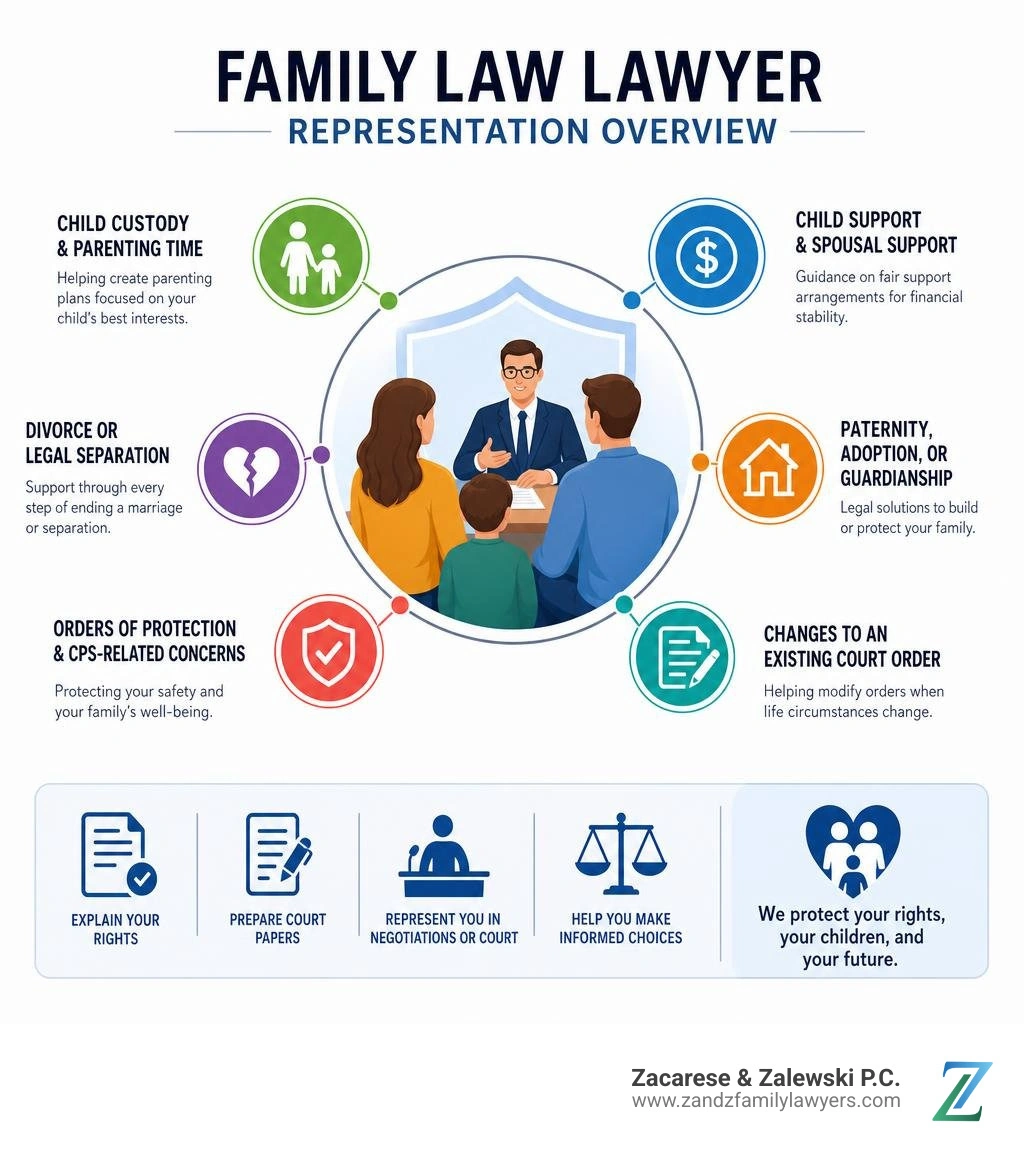
A lawyer family law professional helps people handle legal problems involving marriage, children, support, safety, and family change. They explain your rights, prepare court papers, speak for you in negotiations or court, and help you make informed choices when the stakes are high.
For a Suffolk County parent, this may mean help with:
- Child custody and parenting time
- Child support or spousal support
- Divorce or legal separation
- Paternity, adoption, or guardianship
- Orders of protection and CPS-related concerns
- Changes to an existing court order
Family cases can affect where your child lives, how decisions are made, and your financial future. Court self-help programs can explain forms and steps, but they cannot give legal advice or keep your information private like a lawyer can.
At Zacarese & Zalewski P.C., Steven Zalewski is one of the most well-known family court trial lawyers in Suffolk County. Known around the courthouse as the "bow tie" guy, he helps clients face difficult family court matters with clear guidance and a flat-fee approach designed to reduce cost uncertainty.
This guide explains what family law lawyers handle, when representation may matter most, and how New York family courts work.
Understanding What a Lawyer Family Law Professional Handles
A lawyer family law expert acts as your advocate during emotionally hard times. When family relationships break down or need legal protection, emotions run high. It is hard to make good decisions when you are stressed or hurt. A attorney steps in to shield you from emotional pressure. They handle hard conversations so you do not have to fight directly with your ex-spouse or child's other parent.
We help you see the big picture. We look at facts, state laws, and local rules to create a clear plan. We prepare court documents, gather financial evidence, and present your story in front of a judge. Having an experienced guide means you never have to guess what happens next in court.
Key Practice Areas in Domestic Relations
Domestic relations law covers many issues that affect your home and family. An experienced attorney can guide you through every step. You can read more about our Practice Areas to see how we assist families.
Common family law issues include:
- Child Custody and Visitation: Deciding where children live and who makes big life choices about their health, schooling, and religious upbringing.
- Child Support: Ensuring children get the money they need for housing, clothing, food, and medical care based on state rules.
- Paternity: Establishing legal fatherhood so parents can secure visitation rights or child support.
- Adoption and Guardianship: Helping families expand legally or placing children under the legal care of trusted relatives.
- Domestic Violence Protective Orders: Getting fast court orders to protect victims from physical abuse or harassment.
- CPS and Neglect Matters: Defending parental rights when Child Protective Services investigates a family.
When to Hire a Lawyer Family Law Practitioner
Some simple legal tasks like a standard name change might not need a lawyer. But when high stakes or conflicts arise, trying to represent yourself (known as going pro se) carries major risks. One small mistake on a form can cost you rights to your children or assets.
You should hire a lawyer family law professional right away if:
- The other parent hires an attorney.
- Your case involves serious issues like domestic violence, substance abuse, or child abuse allegations.
- You and your spouse share complex assets like retirement funds, real estate, or business interests.
- Your ex-spouse tries to move far away with your child.
If you live in Long Island, working with a Family Law Attorney Suffolk County NY ensures you have someone who knows the local judges, clerks, and courtroom procedures.
Legal Dissolution Options: Divorce, Separation, and Annulment
When a couple decides to split, they have three legal options: divorce, legal separation, or annulment. Each choice ends or changes a marriage differently under state law.
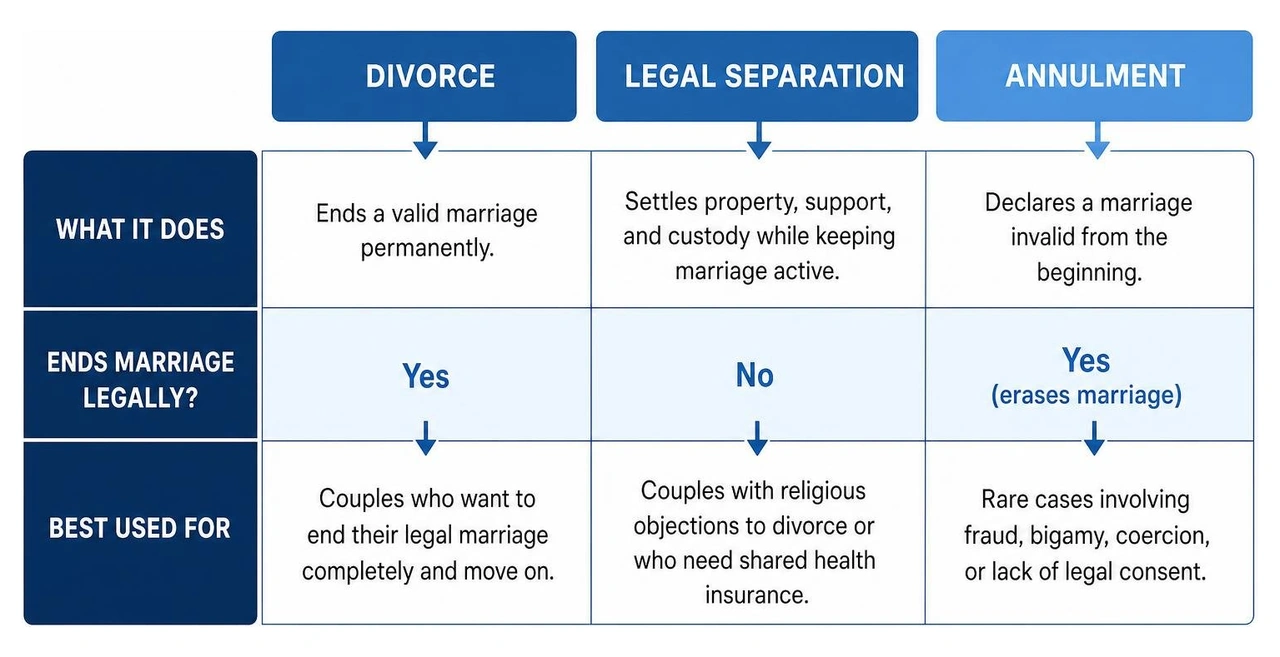
| Option | What It Does | Ends Marriage Legally? | Best Used For |
|---|---|---|---|
| Divorce | Ends a valid marriage permanently. | Yes | Couples who want to end their legal marriage completely and move on. |
| Legal Separation | Settles property, support, and custody while keeping marriage active. | No | Couples with religious objections to divorce or who need shared health insurance. |
| Annulment | Declares a marriage invalid from the beginning. | Yes (erases marriage) | Rare cases involving fraud, bigamy, coercion, or lack of legal consent. |
Key Issues: Property Division, Custody, and Spousal Maintenance
Every split requires resolving big life issues before a judge signs the final order. If you live in towns like Smithtown, talking to a Family Law Attorney Smithtown NY can help you protect your rights in these core areas:
- Property Division: Dividing what you bought during the marriage. Courts divide marital property fairly based on factors like income, health, and marriage length.
- Spousal Maintenance (Alimony): Financial support paid by one ex-spouse to the other. Judges calculate temporary and long-term support using state formulas to cover living costs.
- Child Custody and Support: Legal decisions and parenting schedules must serve the best interests of the child. Parents must also contribute financially based on statutory rules.
The Impact of Prenuptial and Marital Agreements
Marital contracts can simplify a future divorce or legal separation. A prenuptial agreement is signed before marriage, while a postnuptial agreement is made after getting married. These agreements outline asset division, spousal support, and debt responsibilities in advance.
However, state law places strict limits on these contracts. A prenuptial agreement cannot pre-determine child custody or child support. Courts must always evaluate custody and child support based on the child's best interests at the time of the split.
Proper negotiation and full asset disclosure are required under state law to make marital agreements enforceable.
Family Court vs. Supreme Court: Understanding System Differences
Understanding where to file your family legal papers in New York can be confusing because different courts handle different matters.

Jurisdictional Differences in State Courts
In New York, legal authority is split between two primary court systems:
- Supreme Court: This is the only court in New York that can grant a divorce, annulment, or legal separation. It handles dividing marital property and spousal support alongside custody during a divorce.
- Family Court: This court handles cases where the parties are not seeking a divorce or were never married. Family Court hears child custody disputes, visitation, child support petitions, paternity testing, CPS neglect cases, and domestic abuse protection orders.
If you need legal help in Brooklyn or neighboring areas, a Family Law Attorney Kings County NY can help you navigate these specific court filings.
Role and Limitations of Court Facilitators
Many courthouses offer court facilitators or self-help programs. These workers provide free forms and general legal information to help people who represent themselves.
While court facilitators are helpful, they have strict legal limits:
- They cannot give legal advice or tell you what to say in court.
- They cannot act as your lawyer or represent you in front of a judge.
- They do not have attorney-client privilege. Anything you say to a facilitator can be shared.
For standard state resources, you can visit the official New York State Unified Court System website or explore our list of helpful Resources to learn more about how courts operate.
Managing Legal Fees and Hiring Considerations
Legal fees are a big concern for anyone facing a family court case. Knowing how lawyers charge helps you plan your budget without unexpected surprises.
Costs, Retainers, and Choosing the Best Lawyer Family Law Practice
Industry research shows the average fee for a family attorney lands at $317 per hour across the United States. Many lawyers charge a high hourly rate and demand a big initial money deposit called a retainer. As the case drags on with calls, emails, and court delays, that retainer quickly disappears, forcing clients to pay thousands more.
Understanding the Cost of a Family Court Lawyer in Suffolk County NY is crucial before hiring anyone.
At Zacarese & Zalewski P.C., Steven Zalewski takes a completely different approach. He is one of the most well-known family court trial lawyers in Suffolk County, and he believes families deserve total billing honesty. That is why we offer a clear flat-fee model:
- Pre-Trial Fee: One set flat fee covers everything leading up to trial—all filings, phone calls, negotiations, and every single court appearance no matter how many times you must go to court.
- Trial Fee: If your case goes to a full trial, a single set trial fee is due 30 days before trial begins.
- Payment Plans: We always offer payment plans to fit your family's budget.
Compare Steven Zalewski's flat fee with traditional law firms that charge hourly rates. Other firms raise their prices when cases get complicated or abandon clients who run out of money mid-case. With us, you never have to fear opening an unexpected bill or being left without help in court.
Why You Should Never Rely on AI for Family Law
With computer technology advancing quickly, some people try using artificial intelligence (AI) programs to write their separation agreements or custody plans.
We strongly warn readers against using AI to draft family law agreements. Generic, robotic documents miss critical local details and state rules. An AI tool does not understand your unique children, your financial realities, or how local judges operate. A single missing clause created by a computer can ruin a family's life for years.
Only a human attorney with local Suffolk County legal insight and empathy can protect a family's future. Steven Zalewski knows the exact rules and personal dynamics at the Suffolk County Family Court located in Central Islip, as well as courts in Islandia and Riverhead. That human knowledge cannot be replaced by software.
Limited Scope Representation and Unbundled Legal Services
If you cannot afford full legal representation, some attorneys offer unbundled legal services or limited scope representation. You can read more on How Flat Fee Family Court Lawyers Work in New York to see different service formats.
Under an unbundled agreement, a lawyer handles specific parts of your case—like reviewing a settlement contract or drafting a complex petition—while you handle remaining court appearances yourself. This helps lower expenses while giving you professional legal assistance on critical tasks. Flat fee models and unbundled options give clients transparency and help keep legal care affordable.
Finding Free or Low-Cost Family Law Help
If you have very low income, you might qualify for free or low-cost help. If you search for an Affordable Family Lawyer Near Me, consider these options:
- Legal Aid Societies: Free legal help for lower-income parents handling custody, domestic violence, or support cases.
- Modest Means Programs: Bar association programs offering lower hourly rates based on federal poverty guidelines to assist working families.
- Lawyer Referral Services: State and county bar services offering low-cost initial consultations with vetted local attorneys.
In complex high-net-worth cases, thorough legal analysis and financial discovery are essential to protect your assets.
Frequently Asked Questions
Can opposing parties share the same attorney in a family law case?
No. Opposing parties in a family law case cannot share the same attorney. Even if you and your ex-spouse agree on everything and want an amicable divorce, a lawyer cannot represent both of you. Doing so creates a direct conflict of interest. One lawyer can draft the paperwork, but they only represent one person's legal interests. The other person should have an independent attorney review the contract.
What is the difference between Family Court and Supreme Court in New York?
In New York state, Supreme Court is the only court that handles marital dissolutions like divorce, annulment, and legal separation. It handles splitting property and spousal support alongside divorce. Family Court handles domestic cases where parties are not seeking divorce or were never married, including custody, visitation, child support, paternity, orders of protection, and CPS neglect proceedings.
What can a court facilitator do and not do?
A court facilitator can provide court forms, explain legal filing steps, and review paperwork for completeness. However, a facilitator cannot give legal advice, tell you what legal strategies to use, advocate for you in court, or keep your communications private under attorney-client privilege.
Conclusion
Facing a family legal dispute can feel overwhelming, but you do not have to go through it alone. Having clear guidance protects your legal rights, your finances, and your relationship with your children. Choosing an experienced attorney gives you confidence when walking into court.
At Zacarese & Zalewski P.C., Steven Zalewski is one of the most well-known family court trial lawyers in Suffolk County. We stand by our clients in Central Islip, Islandia, Riverhead, and across Long Island with clear, plain-English advice and predictable flat-fee pricing. Whether you need help with custody, support, or CPS matters, we are here to fight for your family's future. Explore our options for a Flat Fee Family Court Lawyer in Suffolk County NY today to get the help you deserve.
📱 Cell: (516) 660-4354📧 Email: steve@zandzfamilylawyers.com🏛 Address: 1601 Veterans Memorial Highway, Suite 500, Islandia, NY 11749
i guarantee you will be heard
Ready to Take the Next Step?
At Zacarese & Zalewski P.C., when something isn’t right, say something—and we’ll do something about it with you.
Our flat-fee structure is clear: one flat fee for pre-trial work, and a trial fee only if your case goes to trial or a hearing. Call now and a professional will return your call quickly; if we miss you, we'll call back the same day.