
When you speak, I guarantee you will be heard
Zacarese & Zalewski P.C.
Step-by-Step Guide to Filing a Police or Personal Intervention Order
Call now: 516-660-4354
"He didn't just win my case. He gave me back my future, my peace of mind, and my ability to breathe again."
From the very first conversation, he changed everything. He didn't just see a case, he saw me, and treated me like family. His knowledge of the law was unmatched, but what truly set him apart was his humanity. If you are looking for a lawyer, stop searching right now.


When You Need Protection: Understanding the Personal Intervention Order

A personal intervention order is a court order that legally prohibits someone from harming, threatening, harassing, or stalking you. If you are in danger — or fear you soon will be — this is one of the most powerful legal tools available to protect yourself and your family.
Here is a quick answer to what most people want to know:
What does a personal intervention order do?
- Stops someone from contacting, approaching, or harassing you
- Can ban the person from your home, workplace, or school
- May include firearm restrictions
- Can be issued as a temporary emergency order within as little as one business day
- Applies to both family members and non-family members (depending on the type of order)
Who can apply?
- Anyone experiencing physical harm, threats, stalking, or harassment
- A parent or guardian applying on behalf of a child
- In some cases, police can apply on your behalf — even without your consent
How do you get one?
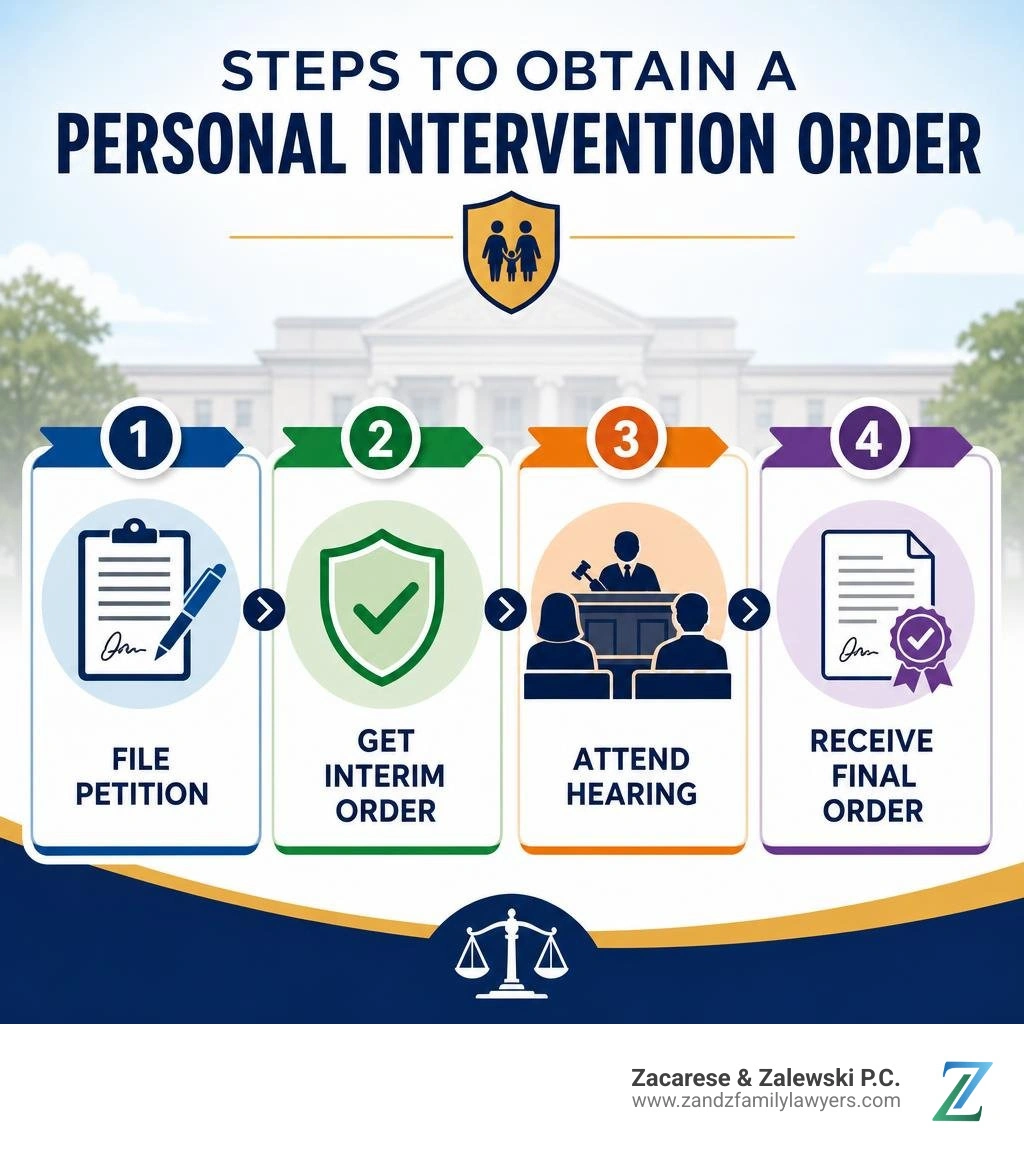
- File a petition with the court detailing the specific incidents of harm or threat
- Request an emergency (ex parte) order if you need immediate protection
- Attend a court hearing where a judge or magistrate reviews the case
- Receive a final order with specific conditions the other person must follow
Whether you are dealing with a dangerous domestic situation or harassment from someone outside your family, the process starts with understanding your options — and acting quickly.
The stakes are real. Getting the wrong order, missing a deadline, or filing incomplete paperwork can leave you unprotected at exactly the moment you need the law on your side.
What is a Personal Intervention Order and Who Does It Protect?

When you feel unsafe, the law can step in to create a legal shield around you. A personal intervention order is a piece of paper signed by a judge. It tells an abuser, stalker, or harasser that they must stay away from you. If they do not, they can be arrested immediately.
This order is designed to stop both physical harm and mental harm. It protects your peace of mind so you can live your life without looking over your shoulder.
Anyone who is being hurt, threatened, or stalked can ask the court for this protection. You can also file one to protect your children. If you are in immediate danger, you do not have to wait. The court system has fast-track options to keep you safe right away.
Domestic vs. Non-Domestic Personal Intervention Order
Not all bad behavior comes from the same source. Sometimes the person hurting you is a spouse or a family member. Other times, it is a neighbor, a coworker, or a stranger. The law handles these two situations differently.
Here is how they compare:
| Feature | Domestic Relationship Order | Non-Domestic Order (Stalking/Harassment) |
|---|---|---|
| Who it protects you from | Spouses, exes, family members, or partners you have a child with. | Neighbors, coworkers, former friends, or strangers. |
| Common names | Domestic PPO, Family Violence Intervention Order. | Personal Safety Intervention Order (PSIO), Stalking PPO. |
| Firearm restrictions | Almost always bans the abuser from buying or owning guns. | Bans firearms if the judge finds a serious safety threat. |
| Key focus | Stopping family violence and protecting home/child custody. | Stopping stalking, cyberstalking, and non-family harassment. |
If you are dealing with a family member, you will file under the domestic framework. If you are dealing with a neighbor who will not leave you alone, you will file under the non-domestic personal safety framework.
Types of Harm Covered by a Personal Intervention Order
You do not have to wait until someone physically hurts you to ask for help. The law covers many types of bad behavior.
A personal intervention order can cover:
- Assault: Actual physical violence, pushing, hitting, or throwing things.
- Stalking: Following you, showing up at your job, or watching your home.
- Threats: Saying they will hurt you, your kids, or your pets.
- Property damage: Smashing your phone, kicking your door, or keying your car.
- Cyberstalking and electronic harassment: Sending endless text messages, posting lies about you online, or pretending to be you on social media.
If someone is making you fear for your safety, their behavior likely qualifies.
Step-by-Step Process to File for Protection
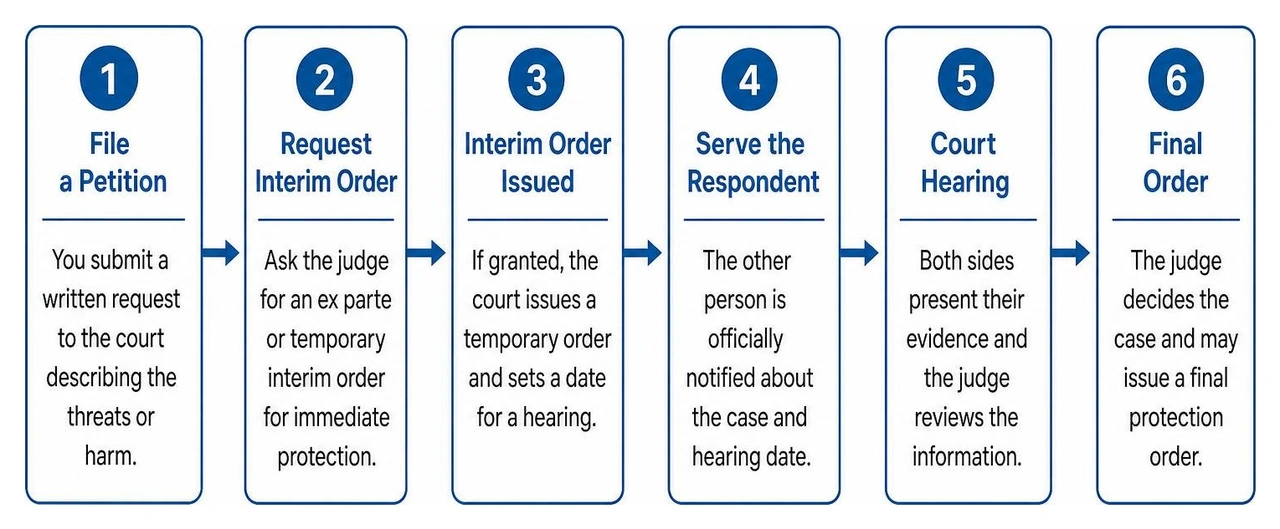
Getting court protection can feel scary, but the process is broken down into clear steps. You do not have to navigate this alone.
Filing the Petition and Getting an Interim Order
The very first step is filing a petition. This is a formal written request where you tell the court exactly what happened. You must write down dates, times, and descriptions of the threats or violence.
If you need help right away, you should ask for an "ex parte" or temporary interim order. "Ex parte" means the judge decides based only on your side of the story. The other person does not get notified beforehand. This is done so they cannot react or hurt you before you get protection.
A judge must rule on an emergency request very quickly—often within one business day. If the judge grants it, you receive an interim order. This order is a temporary shield. However, it is only active once law enforcement formally serves it to the other person.
To learn more about how these temporary shields work, read about Interim orders in personal safety matters.
Preparing for the Court Hearing
An interim order is only temporary. To get long-term protection, you must attend a court hearing.
The court will set a date for a hearing. This gives the other person (the respondent) a chance to tell their side of the story.
There are a few ways this hearing can go:
- Consent without admission: The other person agrees to the stay-away order, but they do not admit to doing anything wrong. This is a fast way to get a final order without a long fight.
- A contested hearing: If the other person disagrees, you will have a mini-trial. You must present evidence like text messages, photos of injuries, police logs, or witness statements.
To make sure you are ready for this day, look over the guide on Responding to an intervention order.
What Protections and Conditions Are Included in a Final Order?
Once the judge signs a final personal intervention order, it becomes a powerful legal barrier. The order will list specific rules the other person must follow.
Common conditions in a final order include:
- No-contact provisions: The person cannot call, text, email, or message you on social media. They cannot even ask a friend to send you a message for them.
- Stay-away rules: They must stay a certain distance (like 100 yards) away from you, your home, your workplace, and your children’s school.
- Firearm restrictions: The person may be forced to surrender any guns they own. They will also be banned from buying new firearms.
- Law enforcement notification: The order is entered into police databases. This means any officer who stops the person will instantly see that they must stay away from you.
Frequently Asked Questions About Intervention Orders
What happens if someone violates the order?
Violating a personal intervention order is a very big mistake. It is not just a civil issue anymore — it is a crime.
If the person contacts you or comes near you, call the police right away. Officers may be able to arrest them. If they are found guilty of breaking the order, they can face jail time, fines, and a criminal record.
Can an order be changed, extended, or appealed?
Yes. Life changes, and the law understands that.
If you need to change the order, you can ask the court. For example, you may need to add a new address if you move. If the order is about to end but you still feel unsafe, you can ask the judge to extend it.
If the judge makes a decision you disagree with at the final hearing, there is a strict 30-day window to file an appeal.
Why you should never use AI for your family law issues
It might be tempting to use a free AI tool like ChatGPT to draft your court papers. Do not do this.
AI does not know the local rules of the Suffolk County Family Court. It does not understand your fear, your children, or the small facts that can change a case. AI often creates robotic, generic papers that miss key details. Those mistakes can hurt a family for years.
To protect your family, you need a human attorney who knows Suffolk County laws and the local court system. You need someone with real insight, care, and trial experience.
Conclusion
When your safety is on the line, you cannot afford to take chances. The court process can feel scary, but you do not have to face it alone.
At Zacarese & Zalewski, we are here to help. Steve Zalewski is one of the most well-known family court trial lawyers in Suffolk County. We regularly help clients in Suffolk County Family Court, including families in Islandia, Central Islip, and Riverhead.
We do things differently than other firms. We believe in total transparency. That is why we offer a true flat-fee model.
- Our Pre-Trial Fee covers all appearances leading up to trial. No matter how many times we have to go to court to protect you, you will not pay more. Other firms may start charging by the hour when things get hard. Some even leave clients behind when they run out of money. Steve never does that.
- Our Trial Fee is one clear fee due 30 days before the scheduled trial date.
- We also offer payment plans to fit your budget.
If you need fast, plain-English legal help, contact us today. Let us help you build the legal shield you deserve. Read more about how we can help you with Zacarese & Zalewski Orders of Protection.
i guarantee you will be heard
Ready to Take the Next Step?
At Zacarese & Zalewski P.C., when something isn’t right, say something—and we’ll do something about it with you.
Our flat-fee structure is clear: one flat fee for pre-trial work, and a trial fee only if your case goes to trial or a hearing. Call now and a professional will return your call quickly; if we miss you, we'll call back the same day.