
When you speak, I guarantee you will be heard
Zacarese & Zalewski P.C.
The Ultimate Guide to Personal Safety and Violence Protection Orders
Call now: 516-660-4354
"He didn't just win my case. He gave me back my future, my peace of mind, and my ability to breathe again."
From the very first conversation, he changed everything. He didn't just see a case, he saw me, and treated me like family. His knowledge of the law was unmatched, but what truly set him apart was his humanity. If you are looking for a lawyer, stop searching right now.


When Safety Comes First: Understanding the Personal Protection Order

A personal protection order is a legal court order that tells a specific person to stop threatening, contacting, or coming near you. It is one of the most direct legal tools available to people facing domestic violence, stalking, or sexual assault.
Here is a quick overview of what you need to know:
| Question | Quick Answer |
|---|---|
| What is it? | A court order restricting a named person's behavior toward you |
| Who can get one? | Victims of domestic abuse, stalking, or sexual assault |
| How long does it take? | Typically 24 to 48 hours for processing |
| Does it cost anything? | No — there is no filing fee |
| How long does it last? | At least 182 days; often up to one year |
| What if it's violated? | The respondent can be arrested immediately |
There are three main types of protection orders:
- Domestic PPO — for people in a current or past relationship (married, dating, living together, or sharing a child)
- Non-Domestic PPO — for stalking victims who have no personal relationship with the respondent
- Sexual Assault PPO — for survivors of sexual assault, regardless of relationship
If you are in Suffolk County and facing a situation where you need a protection order — or someone has filed one against you — the stakes are real. These orders can affect where you live, whether you can see your children, and whether you can own a firearm.
Getting this right matters. A court advocate or an experienced local family law attorney can make the difference between an order that protects you and one that falls short.
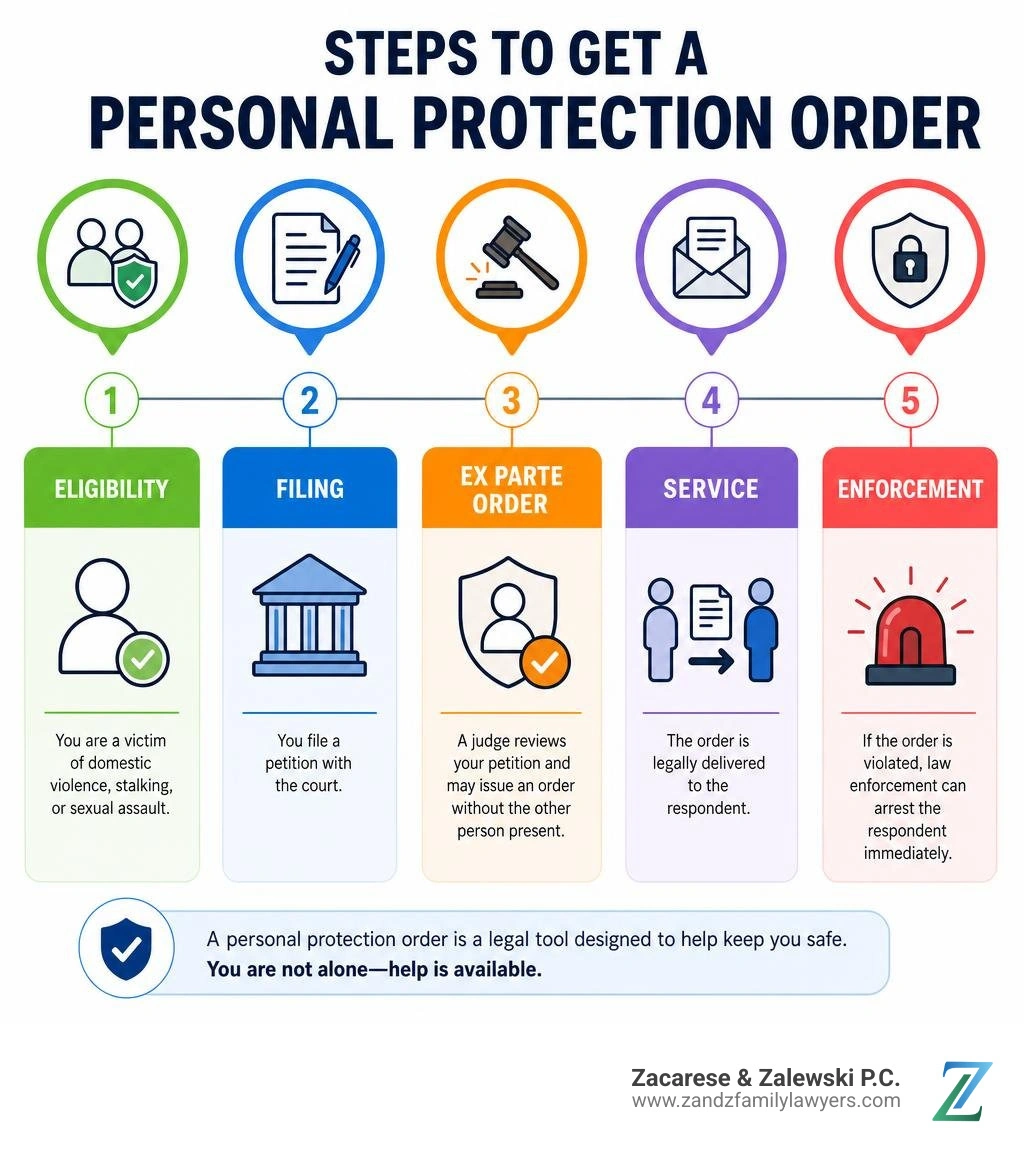
What is a Personal Protection Order and How Does It Work?
A personal protection order acts as a legal safety shield. It is a document signed by a judge that orders another person (called the respondent) to stop certain harmful behaviors. If the respondent breaks these rules, they can go to jail immediately.
In the legal world, people often wonder what is an order of protection or o docket. In places like New York, we often call these "Orders of Protection." In other states, they are known as Personal Protection Orders (PPOs). No matter what name is used, the main goal is the same: keeping you and your family safe from harm.
When you file a petition, you are asking the court to step in. You do not have to wait for the police to arrest the person or for a prosecutor to file criminal charges. You can ask for this help directly from the family division of the court. To understand the different types of help available, you can read more about Personal Protection Orders to see how these laws protect survivors.
The Three Main Types of a Personal Protection Order
Not every bad situation is the same. Because of this, the law provides three different types of protection orders to fit your specific needs. Understanding which one fits your situation is key to getting the right help. When asking can an order of protection be filed regardless of the relationship, the answer depends on which of these three paths you take:
- Domestic PPO: This is for people who have a personal relationship with the person hurting them. To qualify, you must show that you are or were married, lived together, have a child together, or have a history of dating.
- Non-Domestic PPO: This is for protection against someone you do not have a domestic relationship with, such as a neighbor, a coworker, or a stranger. Under laws like MCL - Section 600.2950a - Michigan Legislature, you must show a clear pattern of behavior. This means proving at least two separate stalking incidents that would make a reasonable person feel threatened, harassed, or intimidated.
- Sexual Assault PPO: This order is specifically for survivors of sexual assault. Unlike the non-domestic order, you do not need to prove two separate stalking incidents. A sexual assault in and of itself is enough to qualify you for this protection, regardless of your relationship with the person.
Who is Eligible to File a Personal Protection Order?
To file for a personal protection order, you must meet certain age and relationship requirements. Generally, the person you are filing against must be at least 10 years old (though some states set this limit at 12 or 14 years old).
If you are under 18, you cannot file the paperwork on your own. Instead, a parent or a trusted adult must file on your behalf as your "Next Friend." Also, the law does not allow parents to get a PPO against their own minor children under 18, nor can minor children get one against their parents.
If you are dealing with a domestic abuse situation, you can use standard forms like the CC 375, Petition for Personal Protection Order (Domestic Relationship) to start the process. For those facing physical or emotional abuse at home, our team handles many domestic violence cases and can help you navigate these rules with ease.
The Step-by-Step Process of Filing for Protection
Filing for a personal protection order might seem scary, but the process is set up to help you get protection quickly. In most cases, courts will process your request within 24 to 48 hours. Many people can return to the courthouse the very next business day to pick up their signed order.
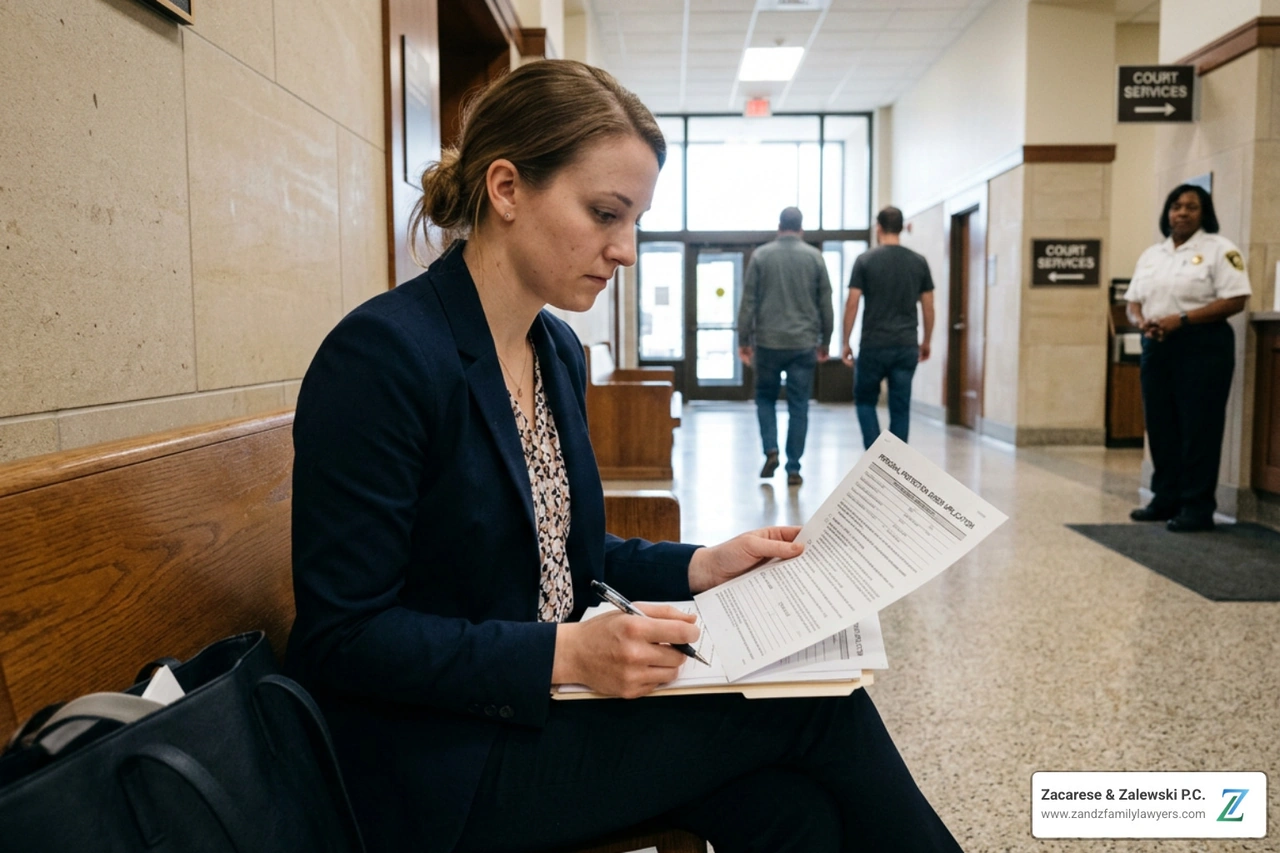
First, you must write a detailed story (called a petition narrative) about what happened. You need to include exact dates, times, and places of the incidents. If you have photos of injuries, copies of threatening text messages, or police reports, you should attach them.
Next, you can ask the judge for an "ex parte" order. This is an emergency order that the judge signs right away without waiting for a full court hearing and without telling the other person first. This ensures you are safe while you wait for the official court date.
Best of all, there are no filing fees to ask for a protection order. If you want to know more about the local steps, you can read about how do i file for an order of protection in family court. If you are starting the year in our local area, we have a guide on how do i get an order of protection at the start of the year in suffolk county to walk you through the local rules.
Serving the Papers and Proof of Service
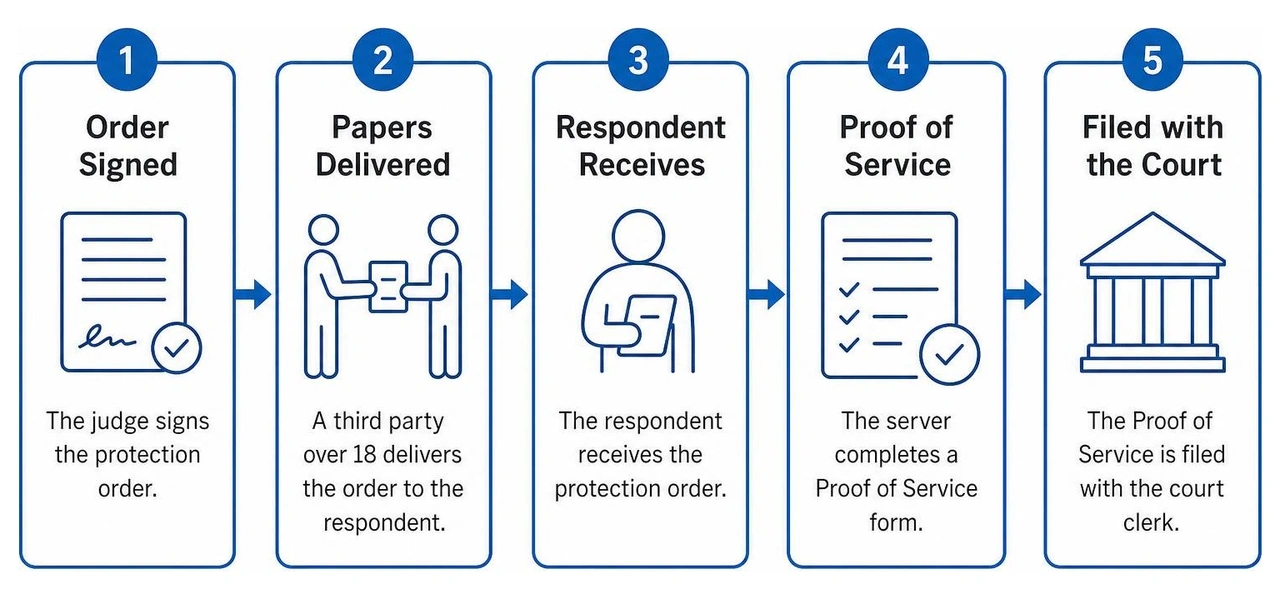
Once the judge signs the order, it must be officially delivered to the other person. This is called "service of process." You cannot hand the papers to the respondent yourself.
Instead, you must have a third party who is over 18 do it. This can be a professional process server, a friend, or the local sheriff's department. To see how these forms look and what information is required, you can view this template of an Application for a Personal Protection Order (PPO).
Once the papers are delivered, the server must fill out a "Proof of Service" form, which must be filed with the court clerk. This proves to the judge that the respondent knows about the order and must follow the rules.
What a Protection Order Can and Cannot Do
A personal protection order is a powerful tool, but it has limits. It is designed to keep you safe, not to solve every legal disagreement.

Here is what a protection order can and cannot do:
- It can order the person to stay away from your home, school, and job.
- It can stop them from calling, texting, emailing, or messaging you on social media.
- It can force them to move out of a shared home.
- It can protect your pets from being hurt or taken by the abuser.
- It can take away their right to buy or own firearms.
- It cannot settle permanent child custody or visitation rules.
- It cannot divide your property or force someone to pay debts.
- It cannot solve neighbor arguments or landlord-tenant fights.
To learn more about these details, check out our guide on orders of protection what they can and cant do in new york family court.
| What the Order CAN Do | What the Order CANNOT Do |
|---|---|
| Force the abuser to leave a shared house | Give you permanent ownership of the house |
| Take away the abuser's guns | Decide permanent child custody |
| Stop all phone calls, texts, and emails | Force the abuser to pay child support |
| Protect your family pets from harm | Resolve a simple neighbor argument |
How Long Does a Protection Order Last and What Happens If It Is Violated?
All protection orders must have a clear expiration date. By law, a personal protection order must last for at least 182 days (about six months), but most ex parte orders last for up to one year.
If you still feel unsafe as the expiration date gets close, you can ask the court for an extension. You should file this request about three weeks before the order expires. On the other hand, if your situation changes, only a judge can modify or end the order. You and the respondent cannot simply agree to ignore the order on your own.
For more details on timelines, read about how long can an order of protection last and see how the rules work locally in our guide on how long does an order of protection last in new york family court.
Penalties for Violating a Protection Order
Violating a personal protection order is a very serious matter. If the respondent breaks the rules of the order, they are subject to immediate arrest by the police.
Under the court's civil and criminal contempt powers, the penalties for a violation include:
- A maximum of 93 days in jail
- A fine of up to $500
- Both jail time and a fine
In some other areas, a breach of a protective order can lead to a fine of up to $10,000 or up to 12 months in prison (or 18 months for severe cases). If a violation occurs, you must call the police right away. If the police do not make an arrest, you can file a motion in court to start a violation hearing. To learn about how these hearings work, read our post on breaking an order of protection what happens in family court.
Frequently Asked Questions about Protection Orders
Can I file for a protection order against a neighbor?
Usually, no. Protection orders are meant for domestic relationships, stalking, or sexual assault. Simple neighbor arguments about property lines or noise do not qualify. If a neighbor is truly stalking you (showing a pattern of at least two separate threatening incidents), you might qualify for a non-domestic PPO. Otherwise, neighbor disputes should go to a local mediation center. You can read more about how courts view non-family violence in the Personal Violence Act 2016 .
What is the difference between a PPO and a family offense proceeding?
A family offense proceeding is a specific type of case in New York Family Court. It is used when family members or people in a domestic relationship commit acts like harassment, assault, or stalking. The court can issue an Order of Protection as part of this case. To understand how these laws work together, look at our guide on family offense proceedings under article 8.
Do I need a lawyer to get a protection order?
You are allowed to represent yourself, and many courts have free forms and advocates to help you. However, having an attorney is highly recommended, especially if the other person hires a lawyer or if you have children together. A lawyer ensures your rights are protected during the court hearing. If you are in the Smithtown area, our orders of protection lawyer smithtown page explains how a local attorney can guide you through the system.
Conclusion: Securing Your Peace of Mind with Local Legal Support
When your safety, your home, and your children are on the line, you cannot afford to take shortcuts. In Suffolk County, navigating the court system can feel overwhelming. That is why having a strong, experienced local trial lawyer by your side is so important.
Steven Zalewski, Esq. is recognized as one of the most well-known family court trial lawyers in Suffolk County. From our office in Islandia, we regularly represent clients in the Suffolk County Family Courts in Central Islip and Riverhead. We understand how the local judges work, and we know how to present your case clearly and effectively. Read more about our approach in when a fresh start requires protection orders of protection in suffolk county.
The Zalewski Advantage: True Flat-Fee Pricing
Many law firms claim to offer flat fees, but they hide fine print in their contracts. Once you go to court a second or third time, they start charging you by the hour. We do not do that.
At Zacarese & Zalewski, we offer a True Flat-Fee Model that covers ALL of your court appearances, no matter how complex your case gets. We will never abandon you mid-case because you ran out of money.
Our simple pricing structure includes:
- Pre-Trial Fee: This single flat fee covers all the prep work, filing, and negotiations leading up to your trial.
- Trial Fee: A single set fee due 30 days before your scheduled trial date.
- Payment Plans: We offer flexible payment plans to make sure you can afford the protection you deserve.
You can learn more about our simple, upfront costs on our flat fee orders of protection page.
A Warning About AI in Family Law
It is tempting to use AI tools like ChatGPT to draft legal agreements or court petitions. Please do not do this.
AI tools create generic, robotic documents. They do not know the local rules of the Suffolk County Family Court, and they often miss critical details about custody, visitation, and safety. A single mistake in your paperwork can ruin your family's life for years. Only a human attorney who understands local laws and has real empathy can protect your future.
If you need help securing your safety, check out our practice areas orders of protection and see how we can assist. For dedicated representation, contact a suffolk county orders of protection attorney for family offense cases today. You can also visit our main orders of protection page to get started.
Don't wait to protect what matters most. Reach out to us today for a fast, same-day response.
📱 Cell: (516) 660-4354
📧 Email: steve@zandzfamilylawyers.com
🏛 Address: 1601 Veterans Memorial Highway, Suite 500, Islandia, NY 11749
i guarantee you will be heard
Ready to Take the Next Step?
At Zacarese & Zalewski P.C., when something isn’t right, say something—and we’ll do something about it with you.
Our flat-fee structure is clear: one flat fee for pre-trial work, and a trial fee only if your case goes to trial or a hearing. Call now and a professional will return your call quickly; if we miss you, we'll call back the same day.