
When you speak, I guarantee you will be heard
Zacarese & Zalewski P.C.
Get Ready for Your Emergency Hearing for Temporary Custody
Call now: 516-660-4354
"He didn't just win my case. He gave me back my future, my peace of mind, and my ability to breathe again."
From the very first conversation, he changed everything. He didn't just see a case, he saw me, and treated me like family. His knowledge of the law was unmatched, but what truly set him apart was his humanity. If you are looking for a lawyer, stop searching right now.


What Happens at an Emergency Custody Hearing?

To prepare for what happens at an emergency custody hearing, gather records that show when and how your child was put at risk. The judge reviews the urgent safety concern, may hear from both sides, and decides whether a temporary custody order is needed. The judge may also set rules for visits and a date to return to court.
In some cases, a judge acts before the other parent can appear. That parent generally has a chance to respond at a later hearing. If Child Protective Services (CPS) removed your child, the court process is different from a custody dispute between parents.
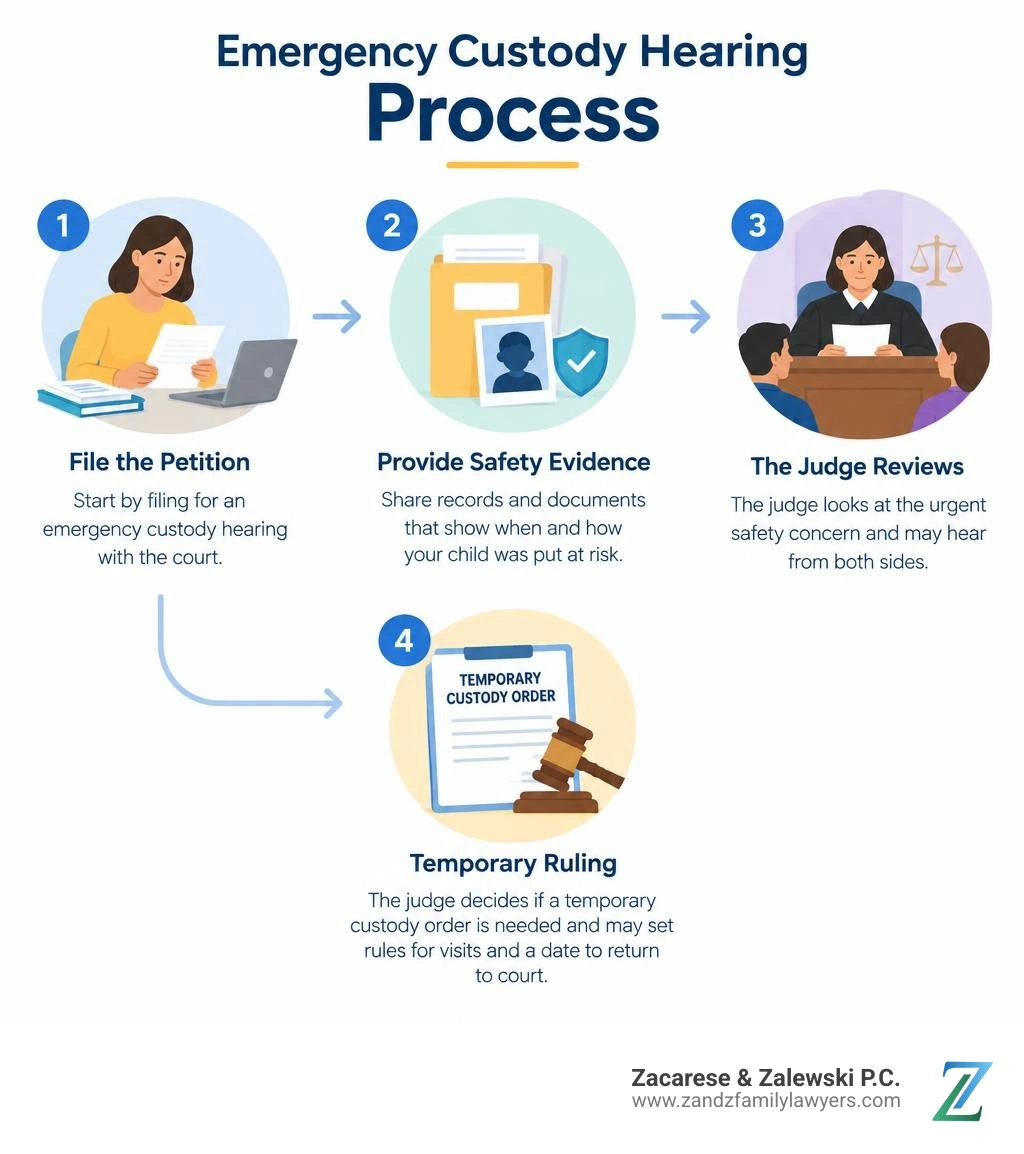
Basic what happens at an emergency custody hearing terms:
What Is an Emergency Custody Hearing and When Is It Held?

An emergency custody hearing is a special court date set up very quickly when a child is in immediate danger. Regular custody battles can take months or even years. When severe trouble happens today, waiting months is not an option. You ask the court to step in right away to protect your child from harm.
Judges only grant these rapid hearings for true emergencies. These situations include:
- Severe physical abuse or credible threats of violence.
- Extreme neglect, like leaving very young children alone or living without food, heat, or basic shelter.
- Serious drug abuse or untreated mental health crises that leave a parent unable to keep a child safe.
- Real threats of parental kidnapping, such as a parent trying to hide a child or take them out of the country.
To get an immediate court date, a parent usually files an emergency application called an Order to Show Cause. In situations involving extreme risk, a parent may ask for an ex parte order. An ex parte order is a temporary ruling made by a judge right away to protect the child before the other parent even has time to appear in court. Helpful guidelines on emergency ex parte orders show how courts step in quickly to stop immediate danger.
When family safety is on the line, some people turn to computer tools like ChatGPT or other artificial intelligence apps to write their court papers. Please do not do this. Family law involves personal feelings, safety facts, and strict local rules. A robotic AI program does not understand the unique safety needs of your child. AI tools make errors, miss critical details, and generate robotic forms that can hurt your family's future.
Only a real human attorney with genuine empathy and deep local knowledge can guide you through this difficult time. Steven Zalewski is known as one of the most trusted family court trial lawyers in Suffolk County. Whether your case is heard at the Suffolk County Family Court in Central Islip or in Riverhead, having an experienced attorney on your side ensures your child's voice is heard.
What Happens at an Emergency Custody Hearing in Family Court
Knowing what to expect takes away a lot of stress. When you walk into the courtroom, the judge focuses entirely on your child's immediate physical and emotional safety. The judge is not trying to settle long-term issues like child support amounts or permanent holiday schedules today. The single goal is deciding where your child will sleep tonight to stay safe.
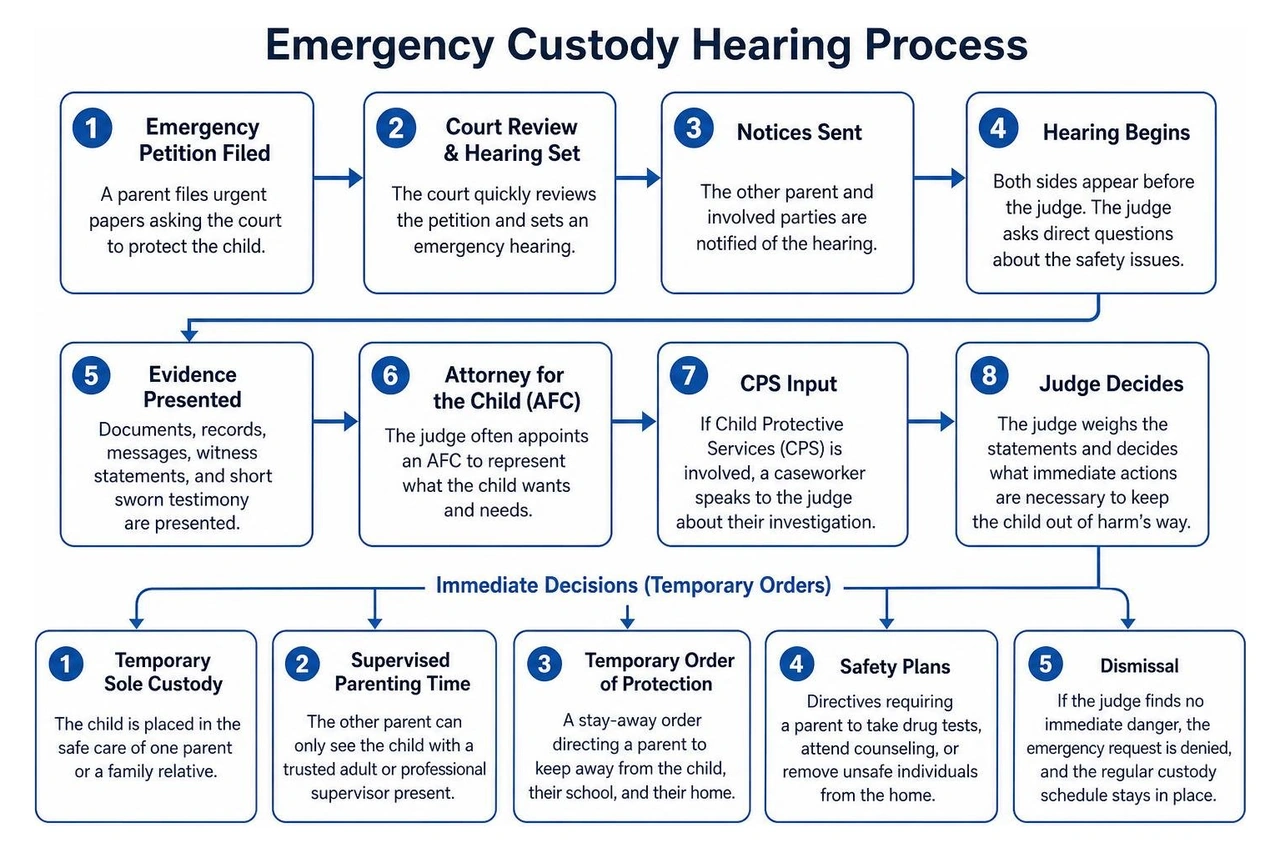
During the proceeding, the judge reviews the emergency petition. Both parents, through their lawyers, explain their side of the story. If you are getting ready for your first family court hearing, the courtroom moves quickly.
The judge often appoints an Attorney for the Child (AFC). This is a lawyer whose sole job is to represent what your child wants and needs. If Child Protective Services (CPS) is involved, a caseworker will also speak to the judge about their home investigation.
Inside the Courtroom: What Happens at an Emergency Custody Hearing
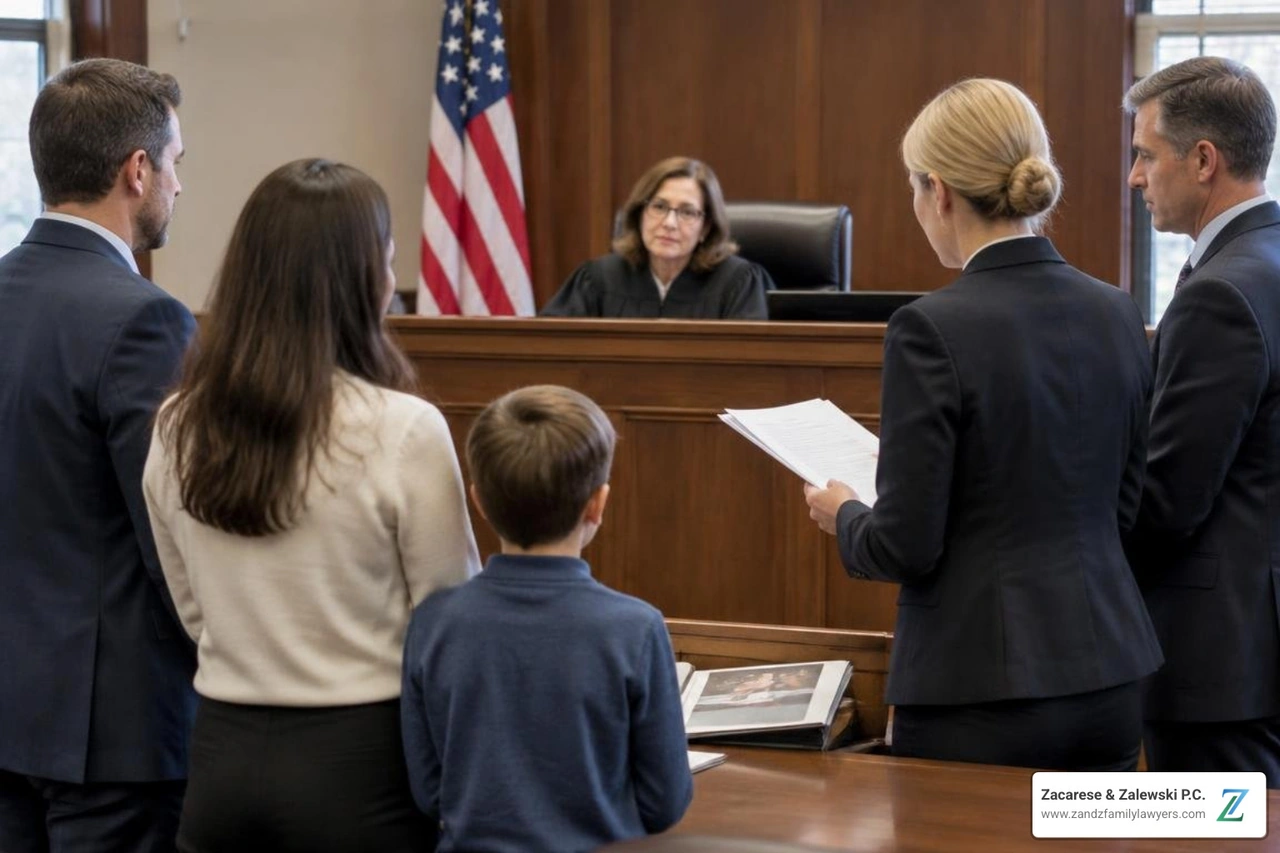
Inside the courtroom, the judge asks direct questions about the safety issues raised in the papers. Because this is an urgent situation, the court handles evidence a bit differently than during a standard trial. Under formal statutory rules for emergency custody evidence, judges can review any information that directly shows risk to a child, even if every formal rule of evidence has not yet been met.
Types of evidence commonly presented include:
- Recent police reports and 911 call logs.
- Medical records, hospital discharge papers, or photos of visible injuries.
- Text messages, voicemails, or emails showing threats or severe substance issues.
- Direct witness statements from people who personally saw what happened.
Both sides may give short sworn testimony. Attorneys are allowed to ask brief questions to test the facts. The judge weighs the statements and decides what immediate actions are necessary to keep the child out of harm's way.
Immediate Decisions: What Happens at an Emergency Custody Hearing Ruling
After hearing the facts, the judge makes an immediate ruling. These decisions are temporary. They remain in place until a full hearing can be held.
The judge can order several different outcomes:
- Temporary Sole Custody: The child is placed in the safe care of one parent or a family relative.
- Supervised Parenting Time: The other parent can only see the child with a trusted adult or professional supervisor present.
- Temporary Order of Protection: A stay-away order directing a parent to keep away from the child, their school, and their home.
- Safety Plans: Directives requiring a parent to take drug tests, attend counseling, or remove unsafe individuals from the home.
- Dismissal: If the judge finds no immediate danger, the emergency request is denied, and the regular custody schedule stays in place.
Understanding how courts change custody quickly for serious issues helps parents focus on the concrete safety facts judges look for when issuing these orders.
How an Emergency Hearing Differs from a Regular Custody Hearing
It helps to understand how an emergency hearing compares to a regular custody trial. An emergency hearing is a rapid check on child safety, while a full custody trial is an in-depth review of every part of your child's life.
| Feature | Emergency Custody Hearing | Regular Custody Hearing |
|---|---|---|
| Primary Focus | Immediate child safety and protection | Long-term best interests of the child |
| Court Timeline | Held within hours or a few days | Takes several months to schedule |
| Notice to Other Parent | Very short notice or temporary ex parte | Weeks of advance formal notice |
| Evidence Standard | Focuses on urgent risk of harm | Full formal trial rules and documents |
| Order Type | Temporary order | Final, permanent court judgment |
| In-Depth Investigations | Limited time for deep evaluations | Full home studies and expert reports |
An emergency order is not permanent. Parents often ask about the rules for turning temporary custody into permanent custody. A temporary order keeps your child safe today, but you still must present full evidence at future court dates to secure a lasting order.
Next Steps: Preparing for the Return Date and Full Custody Trial
Once the emergency hearing ends, your work is not finished. The judge will set a "return date." This is a follow-up court appearance where both parents return with their attorneys to review how the temporary orders are working and prepare for a full trial.
Here is how you should prepare for the return date:
- Follow every court order completely: If the judge sets specific drop-off times or orders supervised visits, follow the rules to the letter. Violating a temporary order can hurt your custody case.
- Keep gathering evidence: Collect school attendance records, therapy updates, and communication logs.
- Stay calm and organized: Keep a daily notebook of all interactions, pickup times, and any concerns that come up.
Dealing with family court is stressful enough without worrying about high legal bills. Many law firms charge high hourly rates that climb every time you call or step into court. Some firms even drop clients in the middle of a case when their money runs out.
We do things differently. Steven Zalewski uses an honest, transparent flat-fee model. Your flat fee covers all court appearances, no matter how many times we need to appear before the judge.
Our pricing is simple and broken into two clear parts:
- Pre-Trial Fee: A set flat fee that covers every single court appearance, phone call, document, and motion leading up to your trial.
- Trial Fee: A single, clear fee due 30 days before your scheduled trial date if your case requires a full trial.
With our firm, you will never face surprise bills. Steve never leaves a client behind because they ran out of funds, and flexible payment plans are always available. From our office in Islandia, we proudly represent parents across Long Island in Central Islip and Riverhead Family Courts.
Frequently Asked Questions About Emergency Custody Hearings
What legal rights do parents have during an emergency custody hearing?
Every parent has the legal right to be told about the claims against them, the right to have an attorney represent them, and the right to present their own evidence. If a judge issues an emergency order before you can appear, you have the right to a prompt follow-up hearing to share your side of the story and challenge the claims.
What is the role of Child Protective Services (CPS) at the hearing?
When CPS removes a child or investigates a family, their caseworker submits a report to the court. The caseworker tells the judge about the home conditions, interviews with the children, and any immediate safety risks. The judge reviews this report when deciding whether the child should stay with a relative, go to temporary foster care, or return home with a safety plan.
Can you file an emergency custody petition on weekends or holidays?
Yes. Family emergencies do not stop for weekends or holidays. Courts have special duty judges and magistrates available outside normal business hours for urgent safety matters. If your child is in immediate danger over a break, learn more about filing emergency custody petitions during the holidays. If a child is in immediate physical danger right now, call 911 so local police can ensure their immediate safety.
Conclusion
When your child's safety is at risk, knowing what steps to take brings clarity and peace of mind. An emergency custody hearing provides fast legal protection when you need it most. By gathering clear facts, staying organized, and following court orders, you can protect your child's well-being.
You do not have to walk into court alone. Our team provides reliable, compassionate legal guidance backed by honest flat fees and fast communication. If you need trusted Suffolk County child custody representation, contact us today.
📱 Cell: (516) 660-4354
📧 Email: steve@zandzfamilylawyers.com
🏛 Address: 1601 Veterans Memorial Highway, Suite 500, Islandia, NY 11749
i guarantee you will be heard
Ready to Take the Next Step?
At Zacarese & Zalewski P.C., when something isn’t right, say something—and we’ll do something about it with you.
Our flat-fee structure is clear: one flat fee for pre-trial work, and a trial fee only if your case goes to trial or a hearing. Call now and a professional will return your call quickly; if we miss you, we'll call back the same day.