
When you speak, I guarantee you will be heard
Zacarese & Zalewski P.C.
Find Free Family Law Help in Your Town Today
Call now: 516-660-4354
"He didn't just win my case. He gave me back my future, my peace of mind, and my ability to breathe again."
From the very first conversation, he changed everything. He didn't just see a case, he saw me, and treated me like family. His knowledge of the law was unmatched, but what truly set him apart was his humanity. If you are looking for a lawyer, stop searching right now.


Find Free Family Law Help Near You

To find free family law help in Suffolk County, start with the LawHelp.org state directory. Choose New York, then look for programs that handle your issue, such as custody, child support, or a neglect case. Call the program or use its online intake form. Ask whether it offers a lawyer for your case or only brief advice. Many people search for pro bono family law lawyers near me when money is tight, and these local programs are often the best place to start.
Have a court date or safety concern? Say so when you contact the program. Free help is not guaranteed, and some programs have income rules or limited space.

Family law pro bono lawyers near me helpful reading:
Understanding Legal Aid vs. Pro Bono Family Legal Services
When you need legal help but cannot pay high legal fees, you will usually hear two terms: legal aid and pro bono. While both offer free or low-cost help, they work in different ways.
- Legal Aid Organizations: These are non-profit law firms. Their staff attorneys receive pay through government grants, like those from the Legal Services Corporation (LSC), and private donations. To use legal aid, you must meet strict government income rules.
- Pro Bono Lawyers: "Pro bono" comes from a Latin phrase that means "for the public good." These are private attorneys who normally charge paying clients. However, they volunteer their time for free to help people who cannot afford a lawyer. For example, North Carolina Rule of Professional Conduct 6.1 encourages attorneys to provide at least 50 hours of free service each year. Many lawyers across the country do this through local bar programs.
You can learn more about official government programs by reading the USAGov guide to affordable legal aid. If you have a case in court and have very low income, you might also qualify for a court-appointed family court attorney pro bono assigned directly by the judge.
| Feature | Legal Aid Organizations | Private Pro Bono Attorneys |
|---|---|---|
| How They Are Funded | Government grants (like LSC) & donations | Private law practice (they donate their time) |
| Staffing | Full-time salaried non-profit lawyers | Private attorneys volunteering hours |
| Income Requirements | Very strict (usually under 125%–200% of poverty line) | Flexible, set by non-profit volunteer panels |
| Type of Help Offered | Advice, clinics, and full representation | Brief advice clinics or full case representation |
| Availability | Often have long waitlists due to high demand | Limited to how many hours the lawyer can donate |
Common Family Law Issues Covered by Free Legal Programs
Free legal programs do not take every kind of case. Because their time and money are limited, they focus on civil cases that protect children and keep families safe. They do not handle criminal defense or traffic tickets.
Free programs often handle:
- Child Custody and Visitation: Protecting your time with your children after a breakup or divorce.
- Child Support and Paternity: Making sure children get financial support and legally naming a child's father.
- Orders of Protection and Domestic Violence: Helping victims get emergency protection from an abusive partner.
- Divorce: Mostly uncontested divorces or divorces involving domestic abuse.
- Guardianship: Helping grandparents or relatives take legal care of children.
- Child Protective Services (CPS) & Neglect Cases: Defending parental rights when child welfare agencies get involved.
How to Find Family Law Pro Bono Lawyers Near Me

Finding a free attorney takes a few steps. You can start by checking verified national and state legal directories.
First, search the LawHelp.org state legal aid directory to find non-profit legal groups in your town or county. These groups know the local judges, the local rules, and how local courts work.
Second, check with your county or state bar association. Most bar associations run volunteer lawyer projects. When you call, ask for their pro bono coordinator or their Lawyer Referral and Information Service. Some referral services offer low-cost consultations for around $20 to help you understand your options.

Connect with Family Law Pro Bono Lawyers Near Me Through Local Volunteer Programs
Many non-profits set up phone lines and evening clinics where you can speak with volunteer lawyers for free. In New York, groups like Family Legal Care serve over 25,000 people each year. They run free phone helplines, offer case planning, and help parents write court papers.
Across the country, many states run "LegalLine" programs. You can sign up online, and a volunteer lawyer will call you to give free legal advice over the phone. You can also use the American Bar Association Free Legal Answers website to post non-criminal family law questions for volunteer lawyers to answer online.
Use Law School Clinics and Courthouse Self-Help Centers
Law schools are another great place to look for free help. Many law schools run family law clinics. In these clinics, law students work on real cases under the direct supervision of licensed, experienced law professors.
You can also visit your local courthouse. Many courts have free walk-in help centers. For example, Maryland family help centers operate in circuit courts across all 24 local jurisdictions. Staff attorneys and court navigators at these desks can explain the court process, give you the right forms, and make sure you filled them out correctly. While self-help staff cannot stand next to you in front of the judge, their guidance can keep your paperwork from getting dismissed.
Eligibility Rules, Income Limits, and Special Programs
Free legal programs have rules about who they can help. Most programs use the Federal Poverty Guidelines to decide if you qualify.
- Standard Income Limits: Most legal aid offices require your household income to be below 125% to 200% of the federal poverty line.
- Asset Caps: They may look at your savings, bank accounts, or property.
- Sliding-Scale Fees: Some programs serve families making up to 250% of the poverty line by charging reduced fees based on your income.
You can look up your state's rules on portals like the New Jersey basic needs and legal aid locator or the Florida Law Help provider portal to see what help is available near you.
Dedicated Legal Resources for Veterans, Seniors, and Abuse Survivors
Some groups offer free legal help even if your income is slightly higher, especially if you fall into one of these groups:
- Domestic Violence Survivors: Victims of abuse often get free legal help for restraining orders and emergency custody, no matter what they earn. Non-profit shelters and specialized family violence clinics provide dedicated attorneys to keep victims safe.
- Military Members and Veterans: Groups like Stateside Legal and local veterans' clinics offer free help to active-duty service members and veterans dealing with divorce or custody disputes.
- Senior Citizens: Grandparents raising grandchildren and seniors dealing with guardianship can get free help through local Offices for the Aging and elder law projects.
- People with Disabilities: Groups like the National Disability Rights Network offer legal support for parents or children with special needs.
What to Prepare Before Contacting Free Legal Services
When you call a legal aid office or pro bono program, they will screen your finances and your case. Having your papers ready will make the intake process much faster.
Gather these items before you call:
- Proof of Income: Your last two paystubs, your most recent tax return, or your benefit letters (such as SNAP, SSI, or unemployment).
- Court Papers: Any petitions, summonses, orders of protection, or court orders you have already received.
- Important Records: Marriage certificates, your children's birth certificates, and current child support records.
- Evidence of Abuse: Police incident reports, hospital records, or photos if your case involves family safety.
- A List of Key Dates: Write down your upcoming court dates and filing deadlines on a piece of paper.
What to Do If You Earn Too Much for Free Legal Help
Many working parents run into a tough problem: they earn just a little too much money to qualify for free legal aid, but they cannot afford thousands of dollars for a private attorney. This gap leaves many good parents feeling stuck.
When this happens, people often wonder how much custody cases cost and worry they will have to go to court alone. But fighting for your children without a lawyer is very risky. Family court rules are strict, and simple mistakes on court forms can cause you to lose parenting time or pay incorrect child support for years. When looking for an affordable family lawyer near me, it is important to find an attorney who gives you clear, upfront pricing instead of endless hourly bills.
Why You Should Never Rely on AI for Custody or Divorce Paperwork
When money is tight, you might feel tempted to use artificial intelligence, like ChatGPT, to write your custody agreement, separation papers, or court petitions. We strongly warn you: do not use AI for your family law case.
AI tools do not understand the specific local court rules in your county. They generate generic, robotic text that often leaves out critical clauses about holiday schedules, school choices, and emergency medical rights. A missing sentence in a custody petition can cause serious legal problems for years.
Computer programs have no human empathy. An algorithm cannot understand your child's routine, your family's history, or what a local judge looks for in a hearing. Only a real human attorney with local courtroom experience can protect your family and your rights.
The Honest Flat-Fee Alternative for Family Court Cases
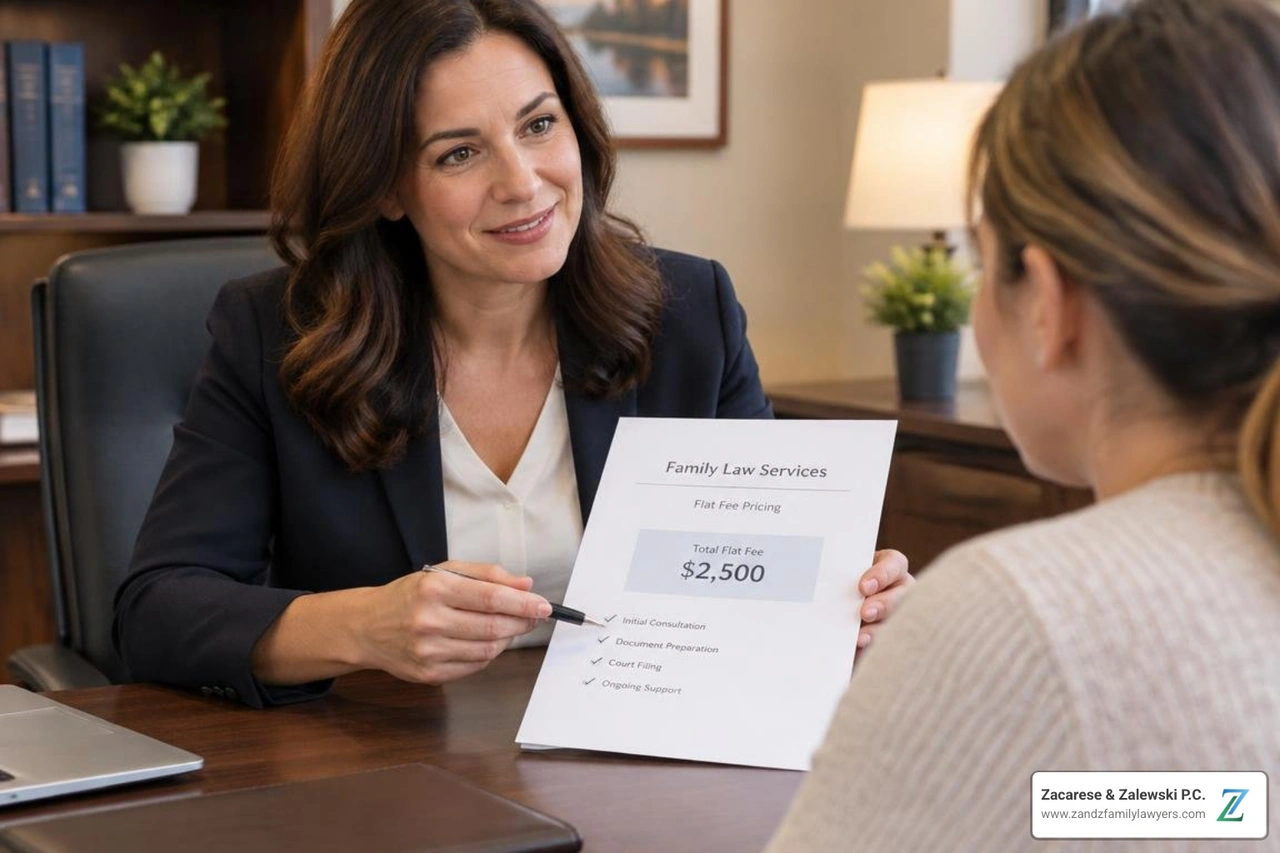
At Zacarese & Zalewski P.C., we believe working parents deserve high-quality legal help without financial surprises. That is why Steven Zalewski built our firm around an honest, transparent flat-fee model.
Steven Zalewski is one of the most well-known family court trial lawyers in Suffolk County. He regularly represents parents in the Suffolk County Family Court, handling cases in Central Islip, Riverhead, and our home office in Islandia.
Unlike traditional law firms that charge open-ended hourly rates that drain your savings, our firm uses clear, upfront flat fees. You will know the exact cost of a family court lawyer in Suffolk County, NY before we begin.
Here is how our two-part flat-fee model works:
- The Pre-Trial Fee: This single flat fee covers everything leading up to your trial. It includes all consultations, phone calls, document drafting, negotiations, and every single court appearance—no matter how many court dates your case takes.
- The Trial Fee: If your case cannot be settled and must go to a full trial, this is a single set fee due 30 days before the scheduled trial date. It covers all trial preparation, witness questioning, evidence presentation, and days in the courtroom.
Many other firms start with an hourly retainer fee lawyer agreement. When a case gets difficult, their fees pile up, and they may abandon clients in the middle of a case when the money runs out. Steve never leaves a client behind because they ran out of money.
To help every family get quality representation, payment plans are always available. We combine flat-fee pricing with fast same-day responses and plain-English advice so you always know what is happening in your case.
Frequently Asked Questions About Free Family Legal Help
Can I Get Help from Family Law Pro Bono Lawyers Near Me if My Income Is Above the Poverty Line?
If your income is slightly above the poverty line, you might not qualify for government-funded legal aid, but you still have options. Many local bar associations run modest-means panels that connect working families with attorneys who charge reduced rates. You can also look for non-profit clinics that use a sliding scale based on your household size and income.
Do Pro Bono Lawyers Charge for Filing Fees or Document Costs?
A pro bono lawyer donates their legal work for free, but the court still has its own costs. These include filing fees, process server costs to deliver court papers, and fees for official records. If you cannot afford court fees, you can file a Fee Waiver application (sometimes called an In Forma Pauperis petition) with the court clerk. If the judge approves it, the court will waive your filing fees.
How Fast Can I Get Assigned a Free Lawyer for an Emergency Case?
Getting a free lawyer usually takes time because legal aid offices have long waitlists. However, if you are facing an immediate emergency—such as family violence or an urgent child safety issue—intake staff can move your application forward faster. If you have an emergency court date tomorrow, go to the courthouse early and ask the clerk or the judge's staff about speaking with an on-duty legal aid attorney or court navigator.
Conclusion
Protecting your children and your parental rights is the most important fight of your life. While free legal aid and pro bono programs offer great help to families who qualify, space is limited and waitlists can be long. If you need dedicated help and want clear answers without hidden costs, reach out to a caring family court attorney in Suffolk County, NY who will stand by your side from start to finish.
📱 Cell: (516) 660-4354📧 Email: steve@zandzfamilylawyers.com🏛 Address: 1601 Veterans Memorial Highway, Suite 500, Islandia, NY 11749
i guarantee you will be heard
Ready to Take the Next Step?
At Zacarese & Zalewski P.C., when something isn’t right, say something—and we’ll do something about it with you.
Our flat-fee structure is clear: one flat fee for pre-trial work, and a trial fee only if your case goes to trial or a hearing. Call now and a professional will return your call quickly; if we miss you, we'll call back the same day.