
When you speak, I guarantee you will be heard
Zacarese & Zalewski P.C.
Working with a Child Custody Case Attorney When Court Gets Tough
Call now: 516-660-4354
"He didn't just win my case. He gave me back my future, my peace of mind, and my ability to breathe again."
From the very first conversation, he changed everything. He didn't just see a case, he saw me, and treated me like family. His knowledge of the law was unmatched, but what truly set him apart was his humanity. If you are looking for a lawyer, stop searching right now.


When a Child Custody Case Gets Tough

If you need a child custody case attorney, start by writing down the schedule you want for your child and gathering school records, messages, and notes about your daily care. Ask the attorney how they would handle court filings, talks with the other parent, and any safety concerns. Before you hire them, ask what the fee covers.
A hard custody case can feel overwhelming, especially when your child's safety or time with you is at stake. Zacarese & Zalewski P.C. helps Suffolk County parents with custody and related family-law matters. The steps below will help you prepare for court and understand what to expect.

Child custody case attorney terms simplified:
- best child custody lawyer suffolk county ny
- family court attorney suffolk county ny
- Suffolk County separation lawyer
What to Expect When You Hire a Child Custody Case Attorney
When you start your case, your attorney helps you take the right legal steps. First, we look at who makes big life decisions for your child and where your child sleeps at night. Walking into a courthouse can feel scary, but having a clear plan makes all the difference. Our comprehensive Custody Cases Guide 2026 explains the exact steps to take when starting out.
Your lawyer will draft legal petitions, gather evidence, and file your paperwork with the clerk. Knowing the official rules for Filing for Custody | New York Courts helps you see why every detail matters. We make sure all your paperwork is filled out right the first time.

Understanding Legal Decision-Making and Physical Living Schedules
Custody is divided into two main parts: legal custody and physical custody. Legal custody means having the power to make major choices for your child. These choices include doctors, surgeries, schools, and religious training. Physical custody, also called residential custody or placement, refers to where your child lives day-to-day.
Parents often share these duties, but courts can also give one parent sole control. Learning about Understanding Joint vs Sole Custody in New York can help you decide what fits your family best.
| Custody Type | What It Means | Daily Responsibilities |
|---|---|---|
| Legal Custody | Decision-making rights for the child | Choosing doctors, selecting schools, agreeing on medical care, and directing religious upbringing |
| Physical Custody | Where the child lives on a daily basis | Providing meals, managing morning routines, handling bedtime, and following the weekly schedule |
How Courts Decide What Is Best for Your Child
Judges do not pick sides based on whether you are the mother or the father. Instead, they look at what is in the best interests of the child. Working with a Suffolk County Custody Lawyer Focused on Children's Best Interests helps make sure the judge hears your story clearly.
To learn more about the local process, see How Custody is Decided in Suffolk County Family Court. Across different states, courts use similar guidelines:
- In Florida, under Florida § 61.13, judges look at a detailed list of factors with no built-in advantage for either parent.
- In Wisconsin, the law looks at the emotional bond between parent and child, the child's needs, and the child's wishes if they are mature enough.
- In California, family courts review safety, school ties, and which parent is most likely to encourage time with the other parent.
Navigating High-Conflict Battles, Court Proceedings, and Judicial Interviews
Some cases involve intense fighting between parents. High-conflict cases often involve serious issues like alcohol abuse, drug use, domestic violence, or untreated mental health problems. In these moments, you may need a protective order or emergency court relief.
A High Conflict Custody Parenting Time Lawyer in Suffolk County NY can help step in when safety is at risk.

How a Child Custody Case Attorney Protects You in Court and Settlement Discussions
Your lawyer is your voice in and out of the courtroom. While we prepare every case as if it will go to trial, we also work hard to settle matters peacefully when possible. Reaching a voluntary agreement keeps control in your hands rather than leaving choices to a judge.
A strong parenting plan covers:
- Weekly overnight schedules and pickup times
- Holiday and summer vacation rotations
- Rules for changing shifts if a parent is a nurse, firefighter, or police officer
- Clear rules for phone calls and video chats
How Judges Consider a Child’s Views
Parents often wonder if their child has to testify. Judges try to keep children out of the courtroom so they do not feel stuck in the middle. Instead, a judge might speak to a child privately in their office. This is called an in-chambers or in-camera interview.
To help ease your worries about these steps, review What to Expect at a Custody Hearing.
State rules vary on when children can speak up:
- In California, a child who is 14 years old or older can talk to the court about their wishes unless the judge decides it would harm them.
- In Maryland, a child who is at least 16 years old can directly petition the court for a custody change.
- In Maryland, courts can also appoint a lawyer for the child, such as a Best Interest Attorney, a Child's Advocate Attorney, or a Child's Privilege Attorney who handles private medical records.
Handling Supervised Visitation, Safety Concerns, and Move-Away Requests
If a parent has active substance abuse issues, anger problems, or a history of neglect, the court may order supervised visitation. This means another trusted adult or a trained professional must stay with the parent during visits.
Relocation is another tough issue. When a parent wants to move far away with a child, they must get written consent or ask the judge for permission. For example, under Florida § 61.13001, moving more than 50 miles away requires a formal agreement or court approval. If a parent tries to leave without permission, the court can order the child brought back immediately.
Managing Interstate Jurisdiction, Support Rules, and Modifying Orders
When parents live in different states, courts use a special law called the Uniform Child Custody Jurisdiction and Enforcement Act (UCCJEA). Under the UCCJEA, the child's "home state" is where they lived with a parent for at least six straight months right before the case started. If judges in two different states get involved, they hold a joint phone call to decide which court keeps the case.
Child support also plays a major role during custody cases. Every state uses set formulas:
- New Jersey uses the New Jersey Child Support Guidelines to set support amounts.
- New York uses statutory percentage guidelines based on parental income and the number of children.
Practical Steps to Document Involvement and Build Your Case File
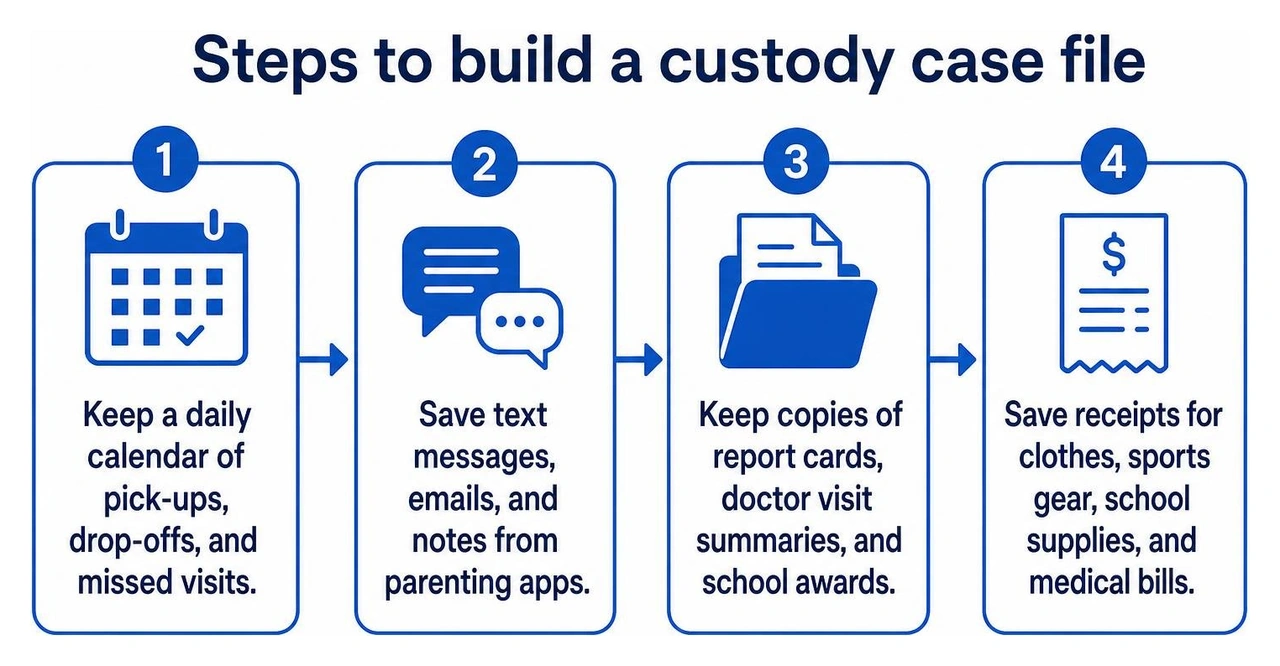
Winning in court requires good records, not just your word. You should track your daily care and keep your evidence organized:
- Keep a daily calendar of pick-ups, drop-offs, and missed visits.
- Save text messages, emails, and notes from parenting apps.
- Keep copies of report cards, doctor visit summaries, and school awards.
- Save receipts for clothes, sports gear, school supplies, and medical bills.
- Never argue with the other parent in front of your child or on social media.
Asking the Court for Major Changes in Your Child's Life
Life changes over time. A schedule that worked when your child was three might not work when they are ten. To change an existing order, you must show that major changes in your child's life have happened since the last court date.
A Custody Modification Lawyer can help you file a petition to update parenting time, adjust pickup locations, or change decision-making rights.
Protecting Your Family with Clear Flat Fees and Real Human Representation
Going to family court is stressful enough without worrying about surprise legal bills. Traditional law firms often charge high hourly rates and ask for new retainers as soon as your account runs low. If a case gets difficult, some lawyers drop out when the money runs out.
At Zacarese & Zalewski P.C., we do things differently. Working with a Flat Fee Family Court Lawyer Suffolk County NY gives you total peace of mind.
How Clear Flat Fees Protect You from Runaway Retainers
Steven Zalewski uses an honest flat-fee model. This flat fee covers all your court appearances, no matter how many times we have to go in front of the judge. Our pricing has a clear, two-part structure:
- Pre-Trial Fee: This covers all filings, meetings, court appearances, and negotiations leading up to your trial.
- Trial Fee: This is a single set fee due 30 days before your scheduled trial date if your case cannot be settled out of court.
Steve never leaves a client behind because they ran out of money. You will never get surprise bills for phone calls, emails, or extra court dates. We also offer payment plans to help fit your family budget.
Why You Need a Child Custody Case Attorney for Individualized Legal Guidance
When family problems come up, it can be tempting to search online or use artificial intelligence tools like ChatGPT to draft custody agreements or separation papers. Please do not do this.
AI programs do not understand the emotional needs of your children, and they do not know the local rules of Suffolk County Family Court. Generic, robotic AI documents miss critical legal details that can harm your family's future for years.
Steven Zalewski is one of the most well-known family court trial lawyers in Suffolk County. He brings real human empathy and deep courtroom experience to every case. Whether your case is heard in Central Islip, Riverhead, or nearby in Islandia, having a trusted local attorney protects your rights when it matters most.
Frequently Asked Questions About Child Custody Cases
At what age can my child tell the judge where they want to live?
There is no magic age where a child gets to make the final choice. Judges listen to older children more closely, but the court always makes the final call based on what is safest and best for the child.
What happens if the other parent tries to move away with our child?
A parent cannot simply move away and take the child with them without permission. If they try to move without written consent or a court order, you can file an emergency petition to keep your child in the area.
How can a child custody case attorney help with my case?
An attorney files all legal paperwork, gathers evidence, handles high-conflict talks, and stands up for you in court so your relationship with your child stays protected.
Conclusion
Custody battles can be tough, but you do not have to walk into court alone. Having a trial-ready lawyer by your side protects your parental rights and helps build a secure future for your child.
If you are facing a difficult custody case, reach out to an experienced family law attorney in Suffolk County, NY who will stand by you from start to finish.
📱 Cell: (516) 660-4354 📧 Email: steve@zandzfamilylawyers.com 🏛 Address: 1601 Veterans Memorial Highway, Suite 500, Islandia, NY 11749
i guarantee you will be heard
Ready to Take the Next Step?
At Zacarese & Zalewski P.C., when something isn’t right, say something—and we’ll do something about it with you.
Our flat-fee structure is clear: one flat fee for pre-trial work, and a trial fee only if your case goes to trial or a hearing. Call now and a professional will return your call quickly; if we miss you, we'll call back the same day.